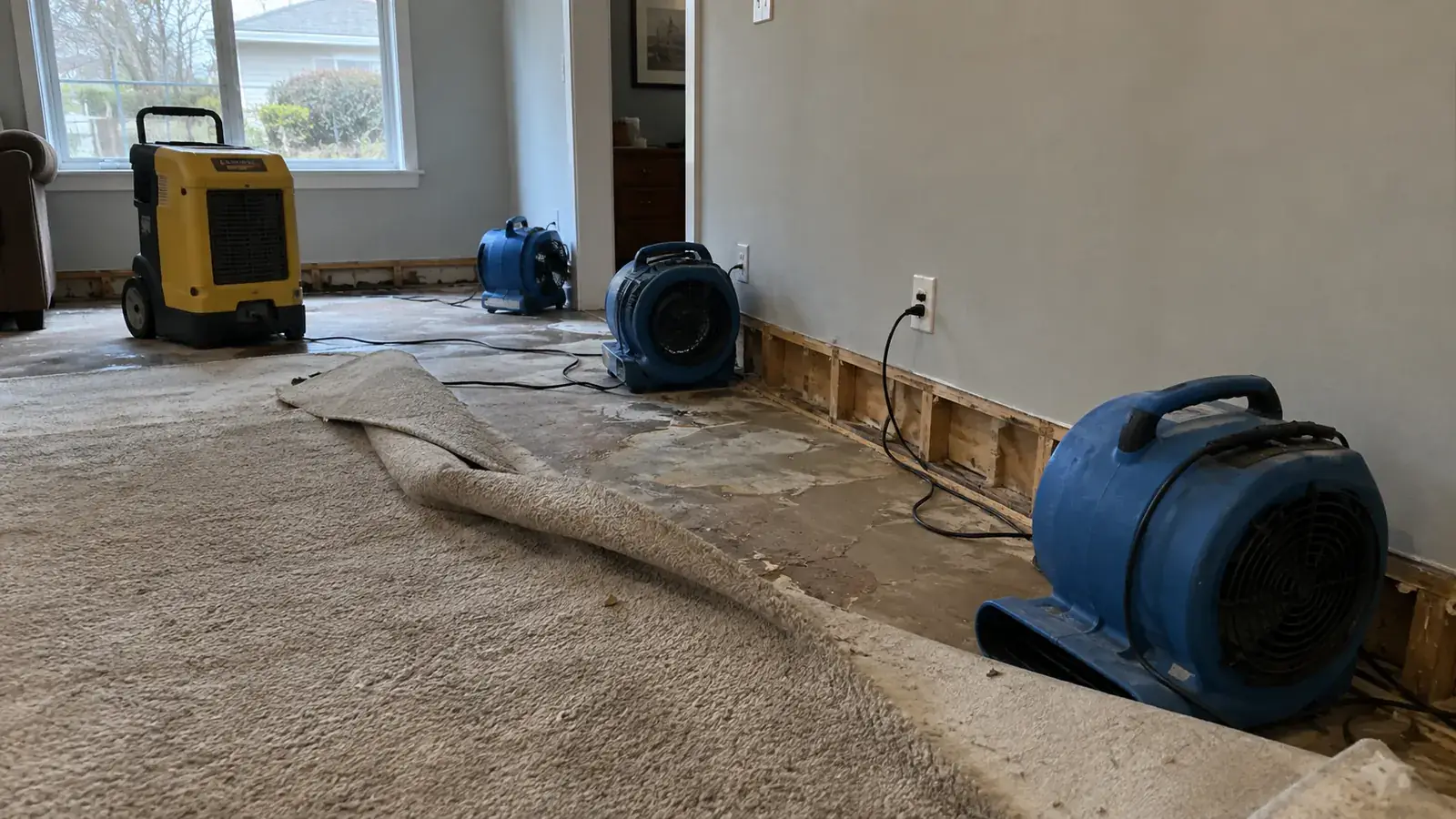
The water stopped. The damage hasn't. Emergency extraction and structural drying across Greenville County, 24 hours a day, including nights and weekends.
Moisture readings taken before anything is moved, so the claim is documented from the first minute rather than reconstructed later.
(864) 515-4097 Call nowWater damage gets more expensive by the hour. Lines are answered at any time, including nights, weekends and holidays.
(864) 515-4097Useful to have ready, though none of it is required:
Every one of these starts the same way: extract, measure, dry, document. What changes is the category of water and how much of the structure it reached.
Truck-mounted extraction for standing water, any hour, any volume.
Supply line and water heater failures, including the cavity water behind them.
Storm-driven water, roof leaks and surface flooding after heavy Upstate rain.
Category 3 losses handled under containment, with affected porous material removed.
Monitored drying of framing, subfloor and wall cavities to a documented standard.
Standing water and saturated insulation under the house, common across the Upstate.
Where growth has already established, scoped and priced as separate work.
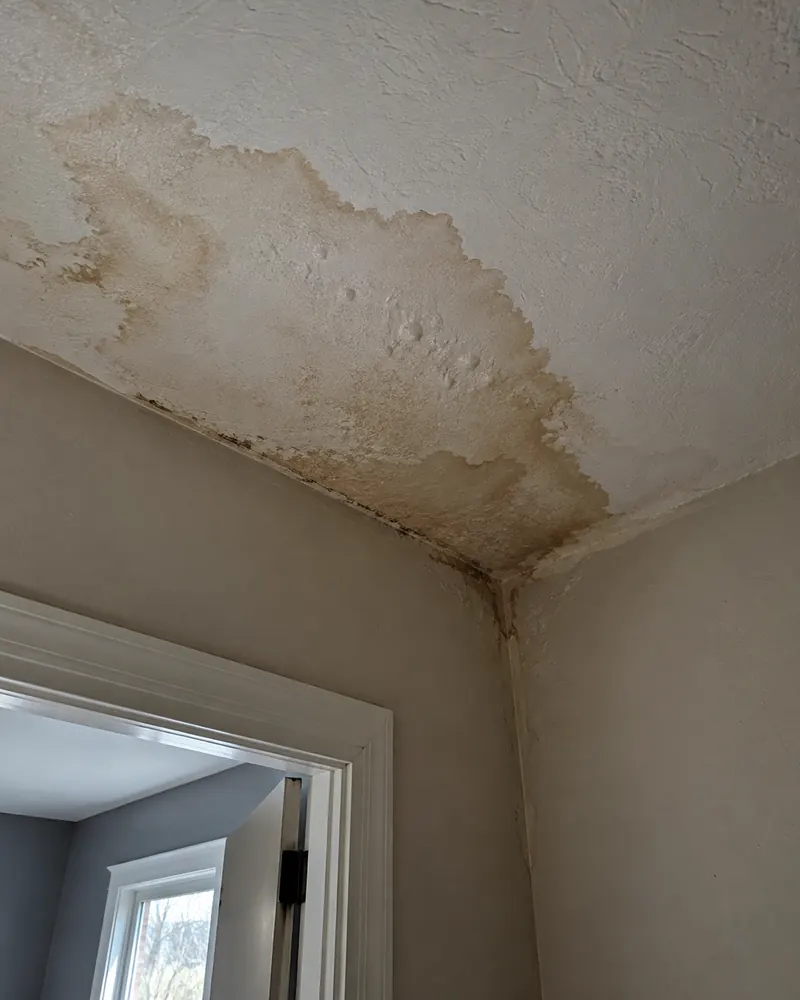
Water tracking through a ceiling from a roof, a bathroom or an upstairs line.
Most people call a plumber, stop the leak, mop what they can see, and put a box fan in the doorway. That is a reasonable instinct and it is where small losses turn into large ones.
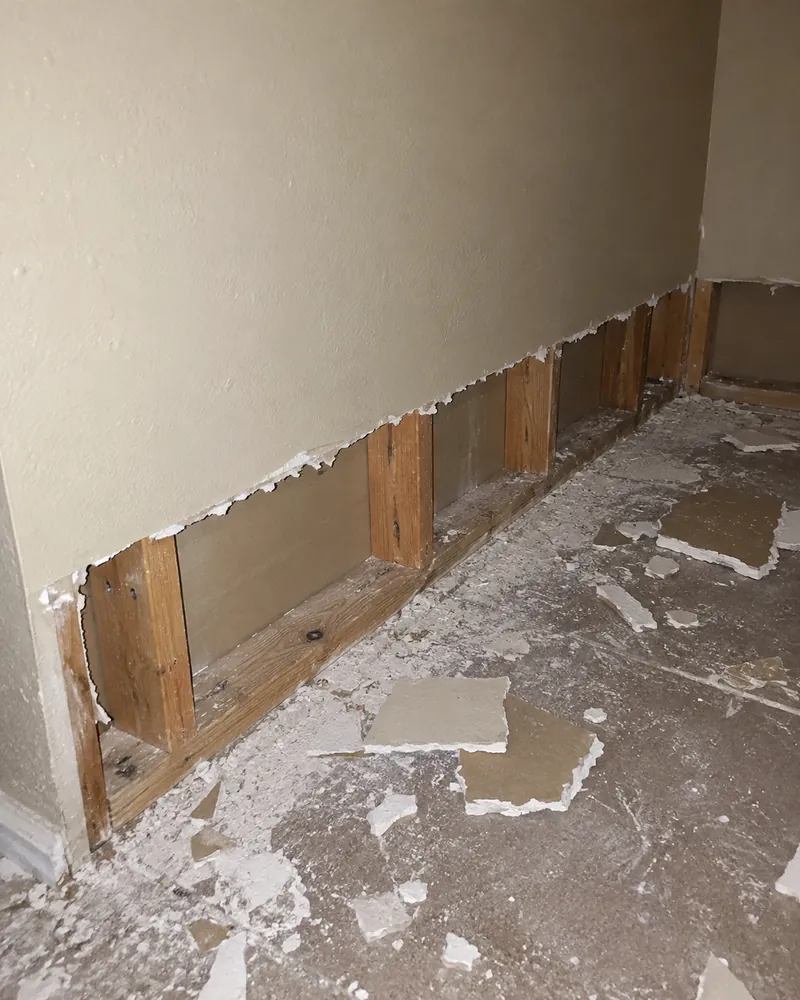
A fan moves air across a surface. It does not pull water out of a wall cavity, and it cannot reach the sill plate under the bottom row of drywall or the subfloor beneath the finish floor. Surfaces dry in a day. The structure behind them stays wet for weeks, in the dark, at the exact humidity mold prefers.
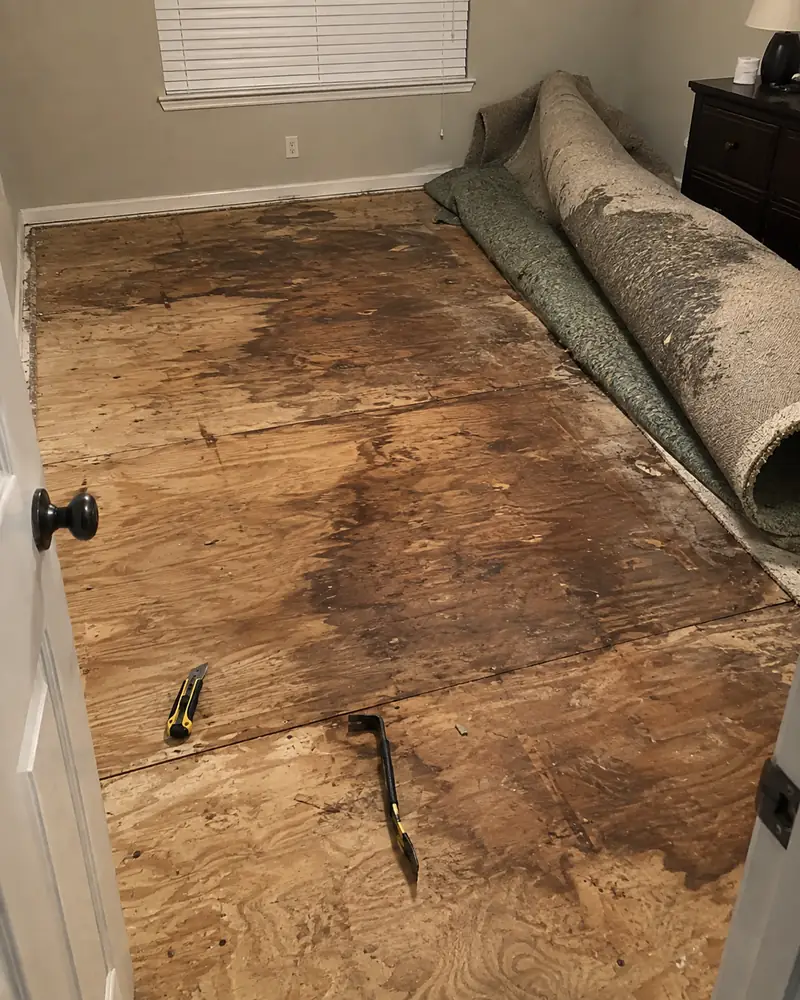
Extraction is different work with different equipment. Standing water comes up first, including the water held in carpet pad, which can hold several times its own weight and will keep re-wetting everything above it. Only then does drying equipment go in, sized to the volume of the room rather than to whatever happened to be on the truck.
Not for the drama. The cost of a water loss is set almost entirely by how many hours the water sat, and the hours between midnight and morning count the same as any others. A call placed at 2am and a call placed at 8am on the same leak are frequently two different jobs with two different invoices.
Water damage is a clock, not an event. Where on this timeline the drying starts is the single biggest factor in what the repair ends up costing.
Water runs flat, then wicks upward inside drywall and insulation. Carpet pad soaks it up and holds it against the subfloor.
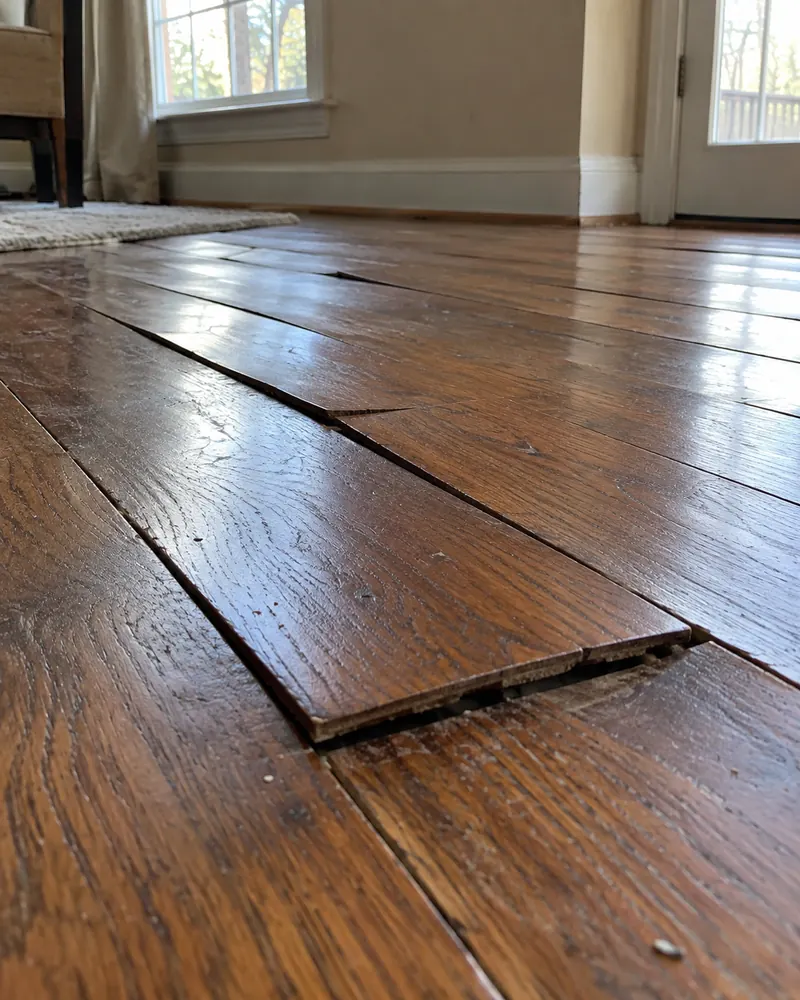
Drywall swells and loses strength. Laminate delaminates. Hardwood cups as the underside takes on moisture the top side cannot release.
Given sustained moisture and Upstate humidity, growth begins inside the cavity. A water loss quietly turns into a second, separate job.
Sill plates, subfloor and framing hold water long after surfaces feel dry. This is where a repair bill becomes a rebuild bill.
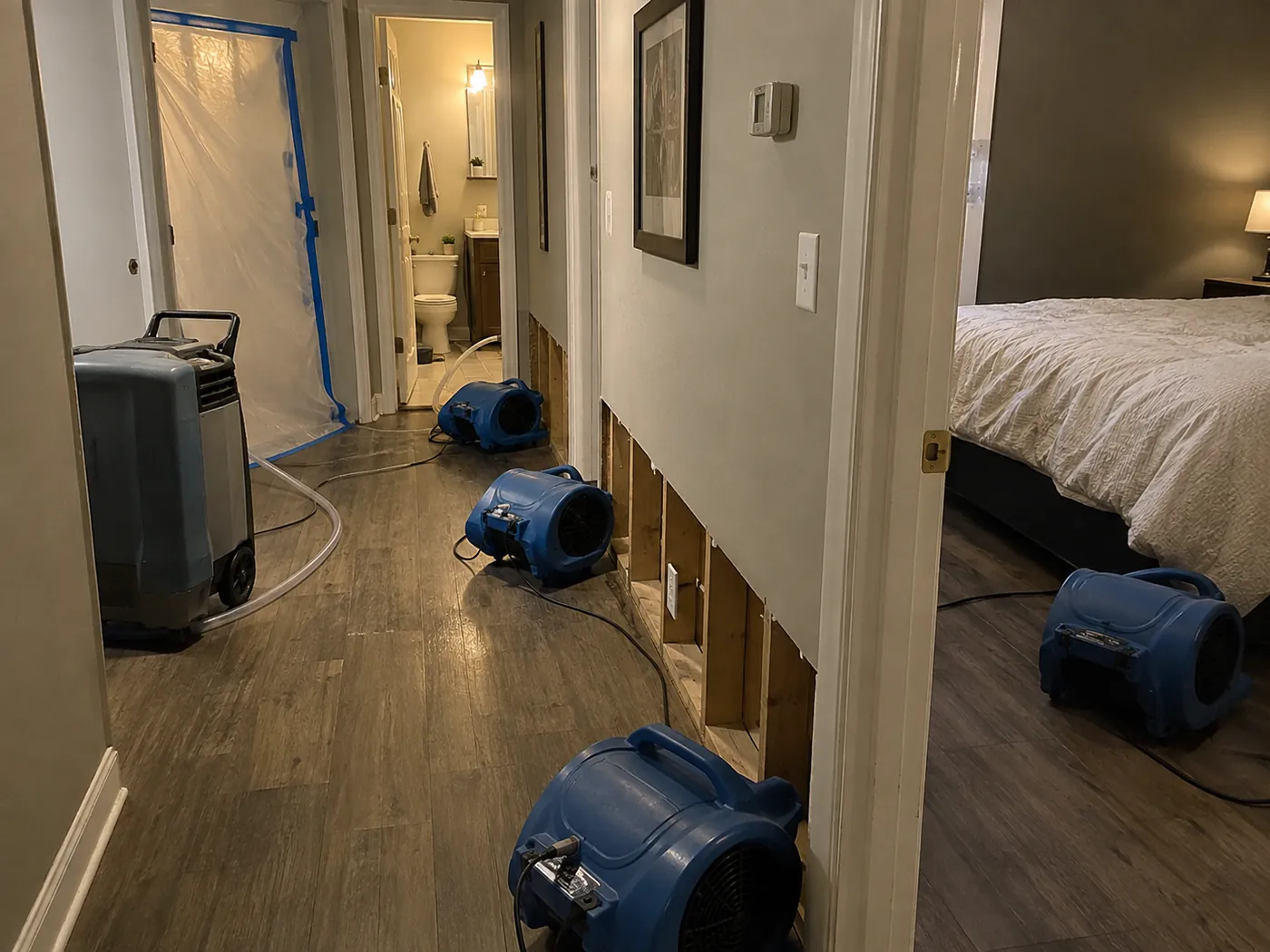
Five stages on every job, from a bathroom overflow to an entire ground-floor loss.
Water off, truck-mounted extraction on standing water, carpet pad lifted where it is holding weight.
Meters and thermal imaging trace how far water traveled inside walls, under cabinets and beneath flooring. Photographed and logged before anything is moved.
Air movers positioned against wet surfaces, dehumidifiers sized to the room's volume, containment where a contaminated category is involved.
Readings taken each day and compared against dry materials in the same building. Equipment stays until the numbers say dry, not until a set number of days passes.
A full moisture log, photographs and scope of work, in the format an adjuster expects to receive.
Two things about the Upstate change how a water loss behaves here, and both work against you.
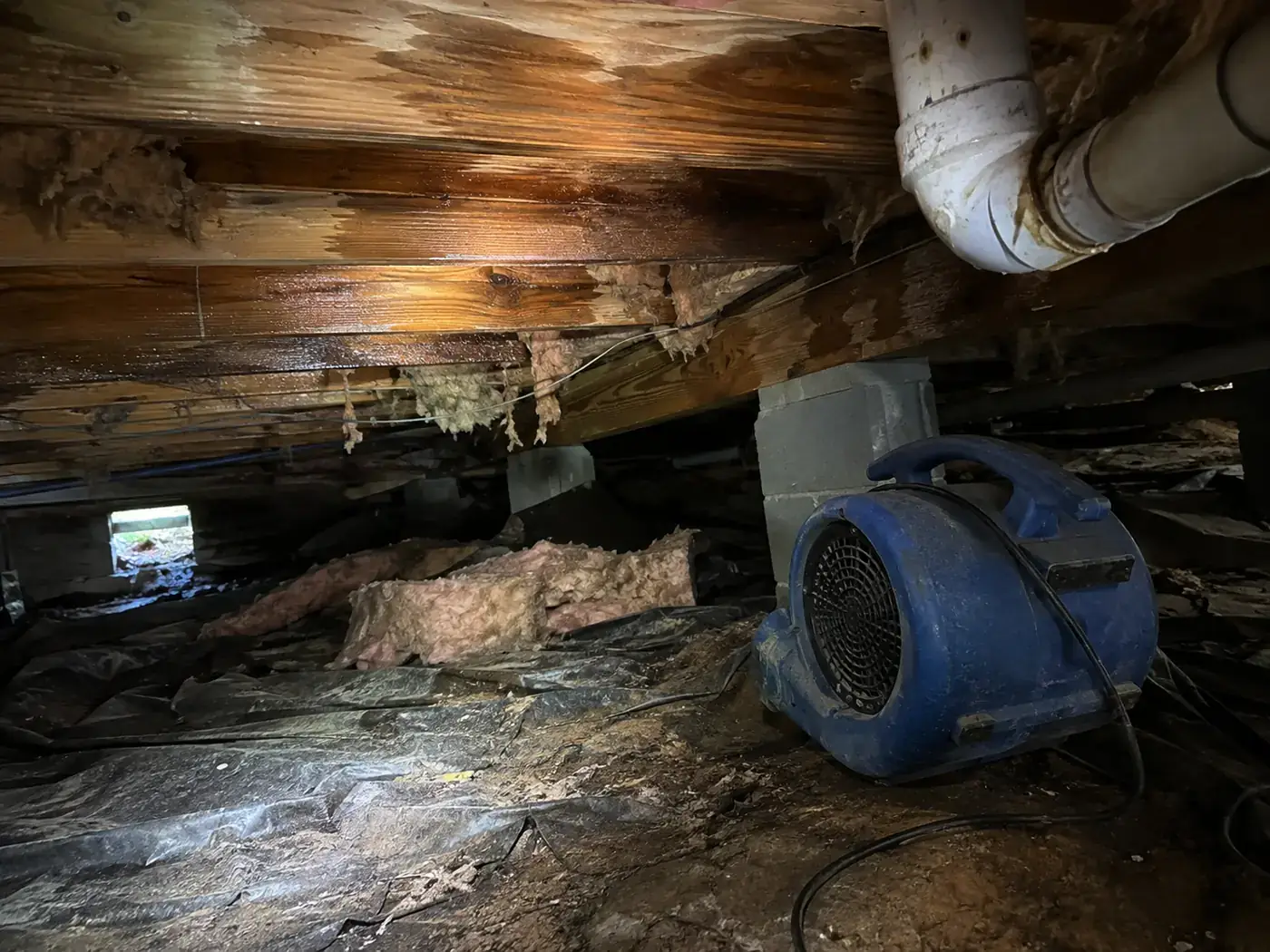
Much of Greenville's housing sits on a crawl space rather than a slab. When a supply line fails upstairs, gravity takes the water somewhere nobody looks for days. Saturated batt insulation falls away from the subfloor, the wood stays wet in a dark unventilated space, and the first sign for most homeowners is a smell rather than a stain. Anything above a crawl space gets checked from underneath, not just from the room where the leak started.
Drying works by moving moisture into the air and then pulling that air dry. In July, when outdoor humidity is already high, opening the windows does close to nothing and can make a room damper than it started. This is the season when homeowner drying attempts most reliably fail, and it is also when the 24 to 48 hour mold window closes fastest.
Add the older housing stock near downtown, where plaster, original hardwood and decades-old plumbing all sit in the same wall, and a small failure reaches further than the equivalent leak in newer construction out toward Five Forks or Verdae.
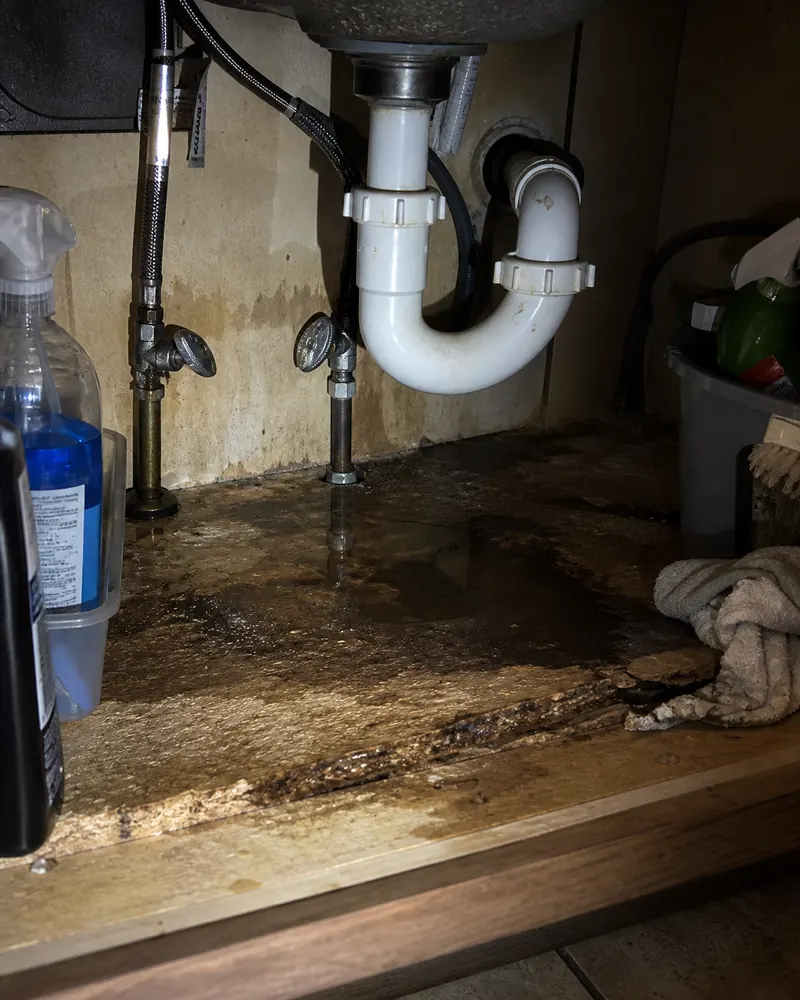
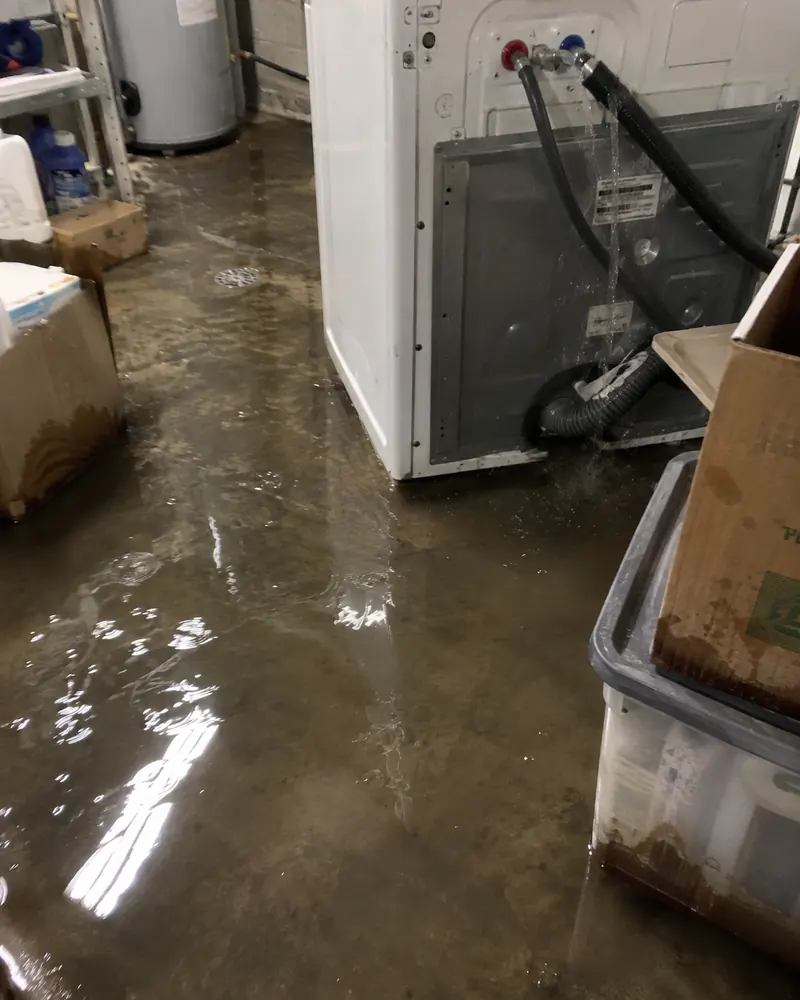
From soaked flooring and cut-back drywall to crawl-space moisture, the work changes depending on where the water traveled and how long it sat.
The distinction turns on one word: sudden. Policies differ and yours is the one that counts, but the general split looks like this.
Two things sink otherwise valid claims: waiting before mitigating, which most policies oblige you not to do, and having no evidence of what was wet before drying started.
That second one is the reason readings are taken and photographed on arrival, then daily until the structure hits a documented dry standard. Without that record, the conversation about what was wet becomes a matter of opinion, and opinion tends to favor whoever is writing the check.
You are also under no obligation to file. For a small contained loss, the deductible sometimes exceeds the repair, and it is worth knowing that before a claim goes on your record. Ask on the phone and you will get a straight answer.
Calling costs nothing, and you will get an honest answer about the need for a crew and what you can safely handle yourself.
(864) 515-4097Crews are dispatched 24 hours a day across Greenville County, including nights, weekends and holidays. Extraction equipment travels on the first truck, so drying starts on the first visit rather than after a separate assessment. You will be given an arrival window on the call.
Sudden and accidental water damage is usually covered: a burst supply line, a failed water heater, a washing machine hose, a storm-driven roof leak. Usually excluded are gradual seepage, a long-running leak under a sink, and groundwater flooding, which needs separate flood coverage. The distinction often comes down to documentation, which is why readings are taken before anything is moved.
Sometimes, if the water was clean, contained, and you caught it within an hour or two. Beyond that, box fans move air across a surface but do not pull moisture out of the structure. Water wicks upward inside drywall and sits in the sill plate and subfloor where a fan never reaches. Surfaces feel dry within a day while the framing behind them stays wet for weeks. That is the most common route from a small loss to a mold claim.
Three to five days for a typical one-room loss with clean water. Longer where hardwood, plaster or a crawl space is involved. Equipment stays in place until the meters read dry, however many days that takes.
Industry ranges run roughly $1,300 to $5,600 for a contained single-room loss with clean water, and well into five figures where sewage, multiple floors or structural repairs are involved. The variables are the water category, how far it traveled and how long it sat. On an insured loss you are usually paying the deductible.
Only if growth has established, which generally takes 24 to 48 hours of sustained moisture. Water reached quickly and dried to standard usually does not become a mold job. Water that sat over a weekend often does. Both are handled, but they are scoped and billed as separate work.
Yes. The moisture log, photographs and scope of work are provided in the format adjusters expect, and questions from the carrier are answered directly. The claim remains yours, and so is the decision to file one at all.
Greenville County and the surrounding Upstate. If you are outside this list, call anyway and you will get a straight answer on reaching you in time to matter.