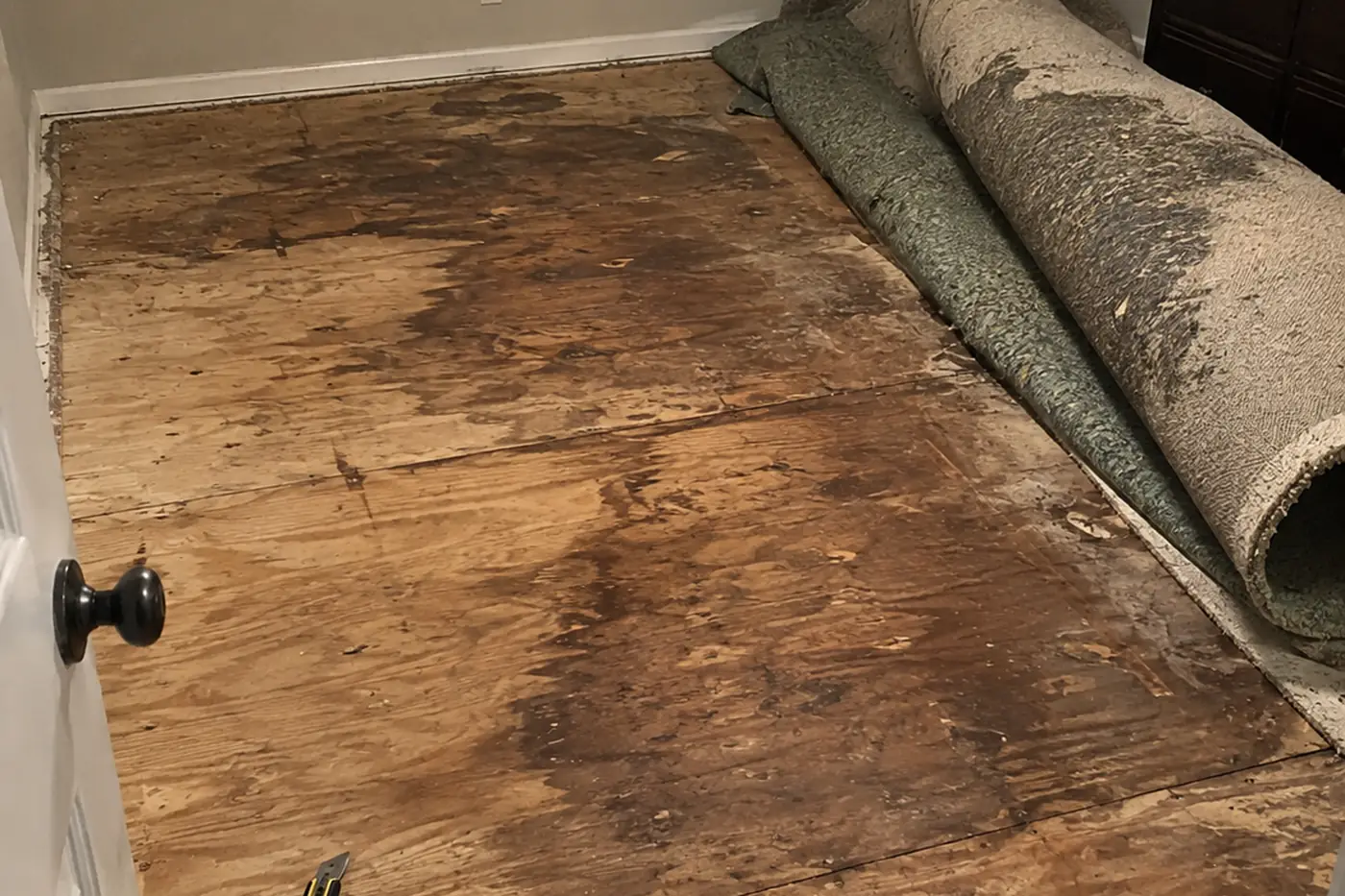
Saving wet carpet comes down to two things you cannot see: what kind of water reached it, and what the pad underneath is holding.
(864) 515-4097 Call nowWater damage gets more expensive by the hour. Lines are answered at any time, including nights, weekends and holidays.
(864) 515-4097Useful to have ready, though none of it is required:
Carpet and the pad beneath it are two different materials with two different fates, and treating them as one thing is the most common mistake in a wet floor. The carpet is frequently recoverable. The pad, in most cases, is not.
Carpet pad is open-cell foam designed to compress and rebound. That structure makes it an extremely effective sponge, capable of holding several times its own weight in water and releasing it very slowly. A pad that stays in place under a drying carpet keeps re-wetting both the carpet above it and the subfloor beneath it, indefinitely.
This is why running a fan over wet carpet rarely works. The surface dries, feels fine underfoot, and the pad quietly carries on holding water against the floor for weeks.
Clean water, caught within a day or two. The carpet can usually be saved. The pad comes out, the subfloor is dried, and new pad goes in underneath the original carpet. Sometimes the carpet is floated, meaning lifted at one edge and dried from below with air forced underneath it.
Gray water from an appliance or a washing machine. Pad out without exception, carpet sometimes, depending on the fiber, how long it sat, and how well it cleans up afterward.
Sewage or water that came in from outside. Both come out. Category 3 water cannot be cleaned back to safe in a porous material, and no amount of drying changes that.
A small amount of clean water caught quickly is a minor job. The same amount left for three days in Upstate humidity is a different conversation, because by then growth has started in the pad and often in the subfloor beneath it.
Roughly forty-eight hours is the usual working window, less in summer. That is not a marketing figure, it is the point at which the decision usually stops being yours to make.
Plywood or OSB subfloor that has been wet swells at the seams and loses strength, and in older Greenville housing it often sits directly over a crawl space where the underside stays damp long after the room feels dry. Tack strip rusts. In houses on a slab, water spreads sideways under the pad and into the bottom plate of the walls.
Saving the carpet is a smaller question than getting the floor under it dry, and the second one is answered with a meter rather than by hand.
Calling costs nothing, and you will get an honest answer about the need for a crew and what you can safely handle yourself.
(864) 515-4097It depends on the water and the time. Clean water caught within a day or two usually means the carpet can be saved and only the pad replaced. Gray water makes it a judgement call. Sewage or outside flood water means the carpet comes out regardless of how good it looks.
In almost every case, yes. Pad is open-cell foam that holds many times its own weight in water and gives it up very slowly. Leaving it in place under a dried carpet keeps the subfloor wet and is the most reliable way to turn a small loss into a mold problem.
A rental extractor pulls surface water out of the carpet, which is genuinely useful in the first hour. What it will not do is remove the water held in the pad or reach the subfloor underneath. For a small clean-water spill caught immediately it is often enough. Beyond that it treats the part you can see.
Two to four days for a typical room with clean water, assuming the pad has been removed and equipment is sized correctly. Longer where the subfloor took on significant moisture or where a crawl space underneath is involved. The meters decide when equipment leaves, not the calendar.