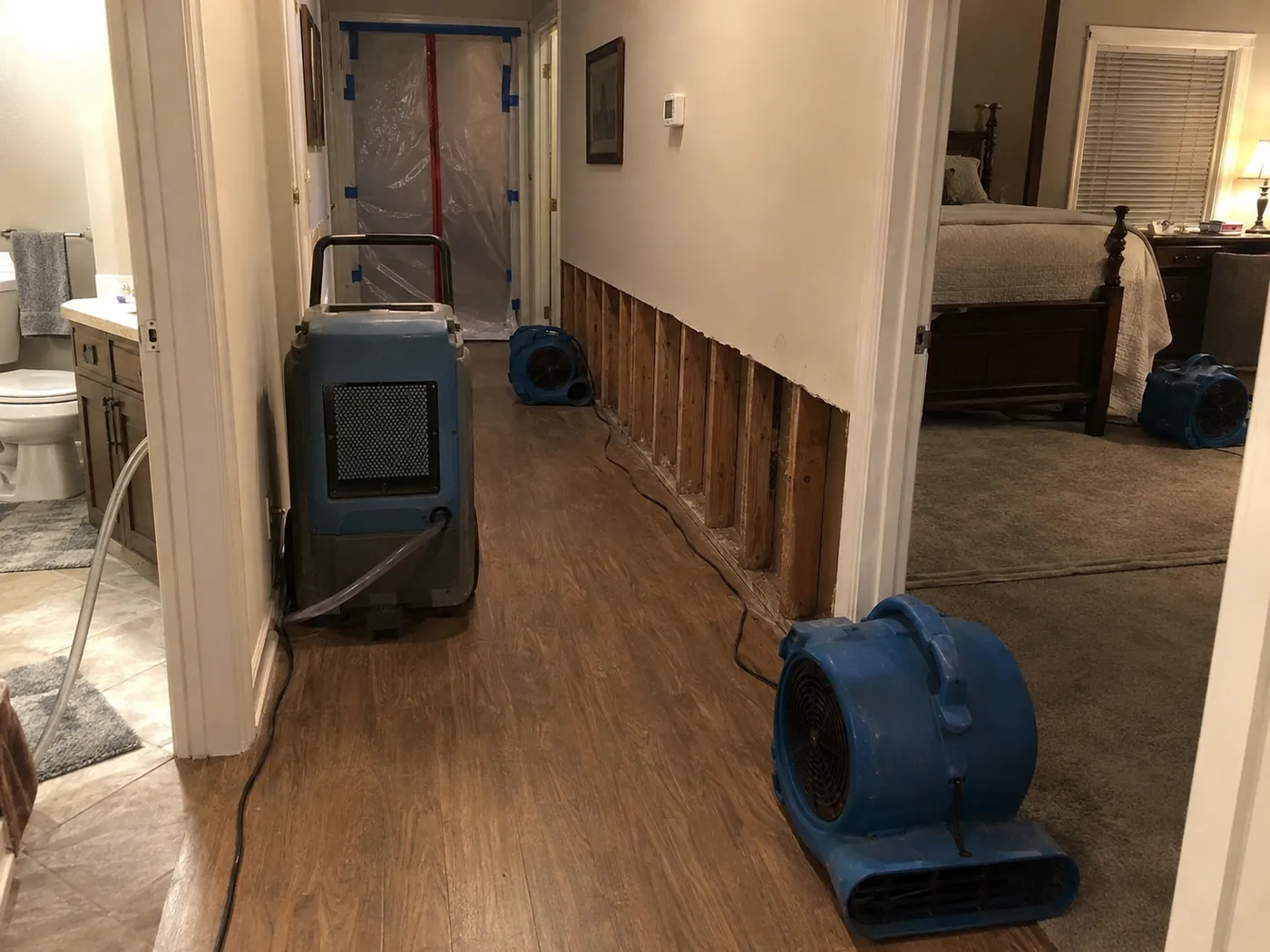
Extraction and structural drying across Travelers Rest, where sloped lots and foothill runoff put water into houses from the outside as often as from a failed pipe.
(864) 515-4097 Call nowWater damage gets more expensive by the hour. Lines are answered at any time, including nights, weekends and holidays.
(864) 515-4097Useful to have ready, though none of it is required:
Travelers Rest sits at the foot of the Blue Ridge escarpment, and that single geographic fact changes the kind of water losses that happen here. In most of Greenville County the call comes from a supply line or an appliance. In TR a meaningful share of them start outside the building.
The land rises north of town toward Paris Mountain and the state line, and the mountains squeeze more rain out of passing systems than falls twenty miles south. When a storm parks over the escarpment, that water has to go somewhere, and it travels downhill across yards, driveways and foundation walls rather than soaking in.
Houses built into a grade take the brunt of it. Water finds the uphill foundation wall, works through any crack or cold joint it can, and appears on the lowest finished floor. Homeowners often assume a plumbing failure and start looking for a leak that was never there.
Most of the Upstate is crawl space or slab. The terrain around Travelers Rest makes a walk-out or daylight basement practical, so there is far more finished below-grade living space here than in Greer or Simpsonville. That space is usually carpeted, often holds an HVAC unit or water heater, and is the last room anyone checks.
Below-grade drying is slower work. There is less natural air exchange, the surrounding soil holds moisture against the walls, and the slab itself can stay damp long after the carpet feels dry. Equipment stays down there longer than it would on a main floor, and the readings decide when it comes out.
This is worth knowing before you file. Water that has run across the ground and entered the building is usually excluded from a standard homeowners policy and falls under separate flood coverage. A pipe that burst inside the wall is usually covered. The two can look identical once the carpet is wet.
Which is why the source gets established and photographed before anything is torn out. On a hillside property that distinction is often the whole claim, and it is very hard to argue after the fact.
Calling costs nothing, and you will get an honest answer about the need for a crew and what you can safely handle yourself.
(864) 515-4097Yes, including the downtown streets, the properties along the Swamp Rabbit Trail corridor, Gap Creek, Tigerville Road and the newer developments spreading north toward the state line.
Usually not under a standard homeowners policy. Surface water and groundwater entering a building generally fall under separate flood coverage. Water from a failed pipe inside the structure is treated differently. The documentation of how the water entered is what decides it, so that gets recorded before anything is moved.
Longer than the same square footage upstairs. Below-grade spaces have less air exchange and the surrounding soil holds moisture against the walls and slab. Equipment stays until the meters read dry against unaffected material in the same building, which on a basement is often a day or two past the point it feels dry.
The higher ground north of town lifts moving air, which wrings more rain out of it. Homeowners who move up from the city usually notice within the first year. It matters here because exterior water intrusion is a bigger share of the losses than it is further south.