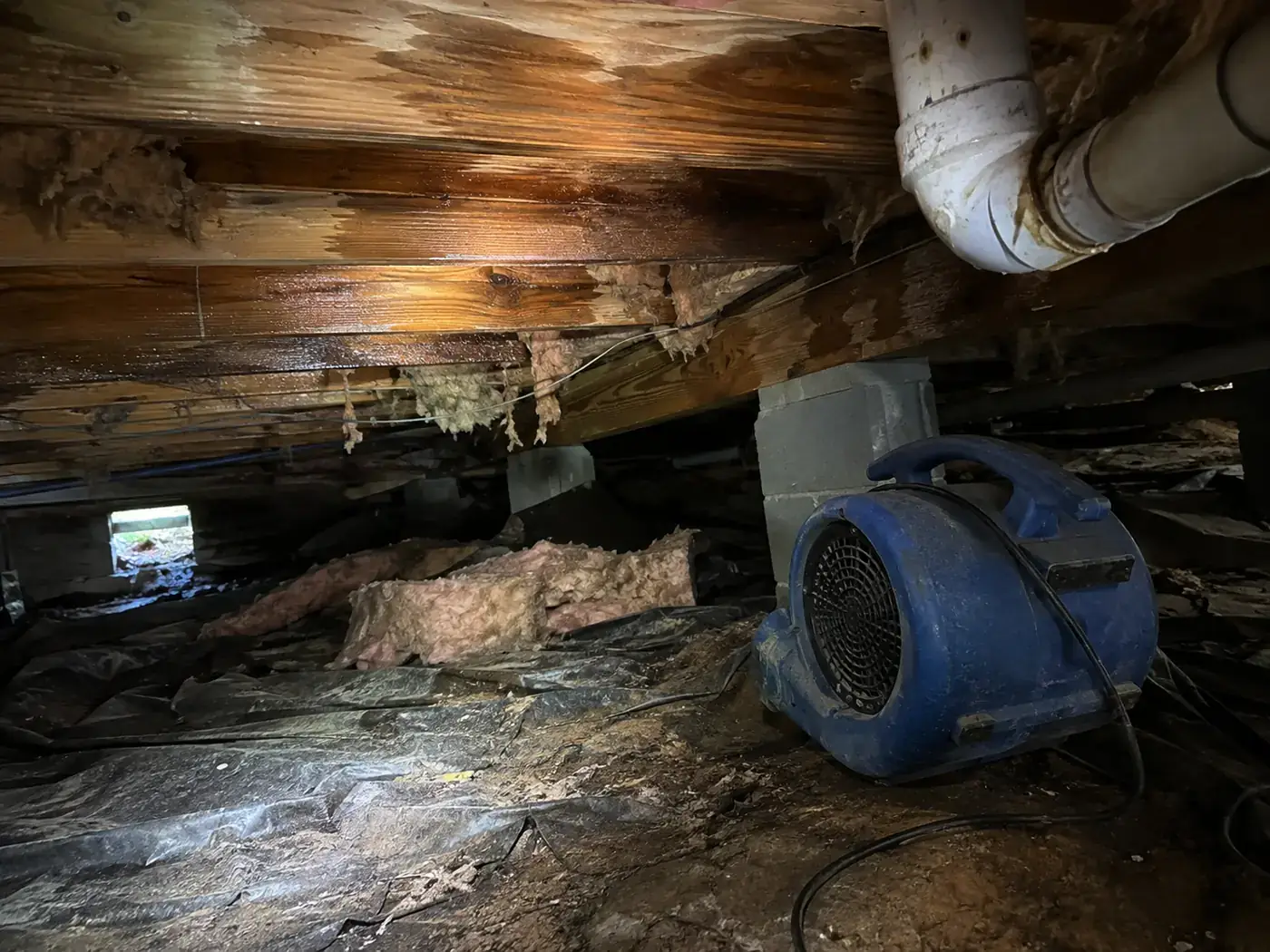
The most common water loss in the Upstate is the one nobody sees. A crawl space holds water for weeks, and the first sign upstairs is usually a smell.
(864) 515-4097 Call nowWater damage gets more expensive by the hour. Lines are answered at any time, including nights, weekends and holidays.
(864) 515-4097Useful to have ready, though none of it is required:
A large share of housing across Greenville County sits on a crawl space rather than a slab, and that single construction detail changes how water damage behaves here. When a line fails on the floor above, gravity takes the water somewhere nobody goes.
A crawl space is dark, poorly ventilated and close to the ground. Water that reaches it does not evaporate the way it would in a heated room. Batt insulation between the joists absorbs it, gets heavy, and falls away from the subfloor in sheets. The joists and subfloor above stay wet against that fallen insulation for weeks.
Because none of this is visible from inside the house, the loss is usually discovered by smell, by a floor that feels soft, or by a mold question during a home sale. By then the moisture has been working for a long time.
Standing water is pumped out and the vapor barrier is pulled back where water is sitting under it. Saturated insulation is removed rather than dried, because wet batt insulation does not recover and holding it against the subfloor keeps the wood wet. Debris and any contaminated material come out.
Then the structure itself is dried, with equipment placed in the crawl space and monitored against readings, exactly as it would be in a room. Joists, sill plates and subfloor are the materials that matter. A new vapor barrier goes down once the ground and structure are dry.
Supply line failures on the floor above are the most common. Then groundwater entering after sustained heavy rain, particularly where grading slopes toward the house or gutters discharge next to the foundation. Then failed sump pumps, condensate lines discharging into the crawl space, and HVAC duct condensation in summer.
Anything above a crawl space gets checked from underneath after a water loss, not only from the room where the leak appeared. That single step catches most of the damage that otherwise goes unnoticed for months.
Calling costs nothing, and you will get an honest answer about the need for a crew and what you can safely handle yourself.
(864) 515-4097A musty smell in the house, floors that feel soft or cold, higher than usual humidity indoors, or visible condensation on ductwork. The only reliable check is to look, which means a flashlight and getting under there, or having someone do it.
Removed. Wet batt insulation loses its structure, falls away from the subfloor and holds water against the joists. Drying it in place does not restore it and keeps the wood wet underneath. It is replaced after the structure is dry.
It depends on the source, not the location. A supply line that failed above it is usually covered. Groundwater entering through the foundation usually is not and needs flood coverage. Long-term seepage is generally excluded as gradual damage.
Encapsulation helps with ongoing ground moisture and humidity, which is a real problem in this climate. It does not stop a supply line failing above, and sealing a crawl space that is already wet traps the moisture in. Dry it first, then decide about encapsulation.