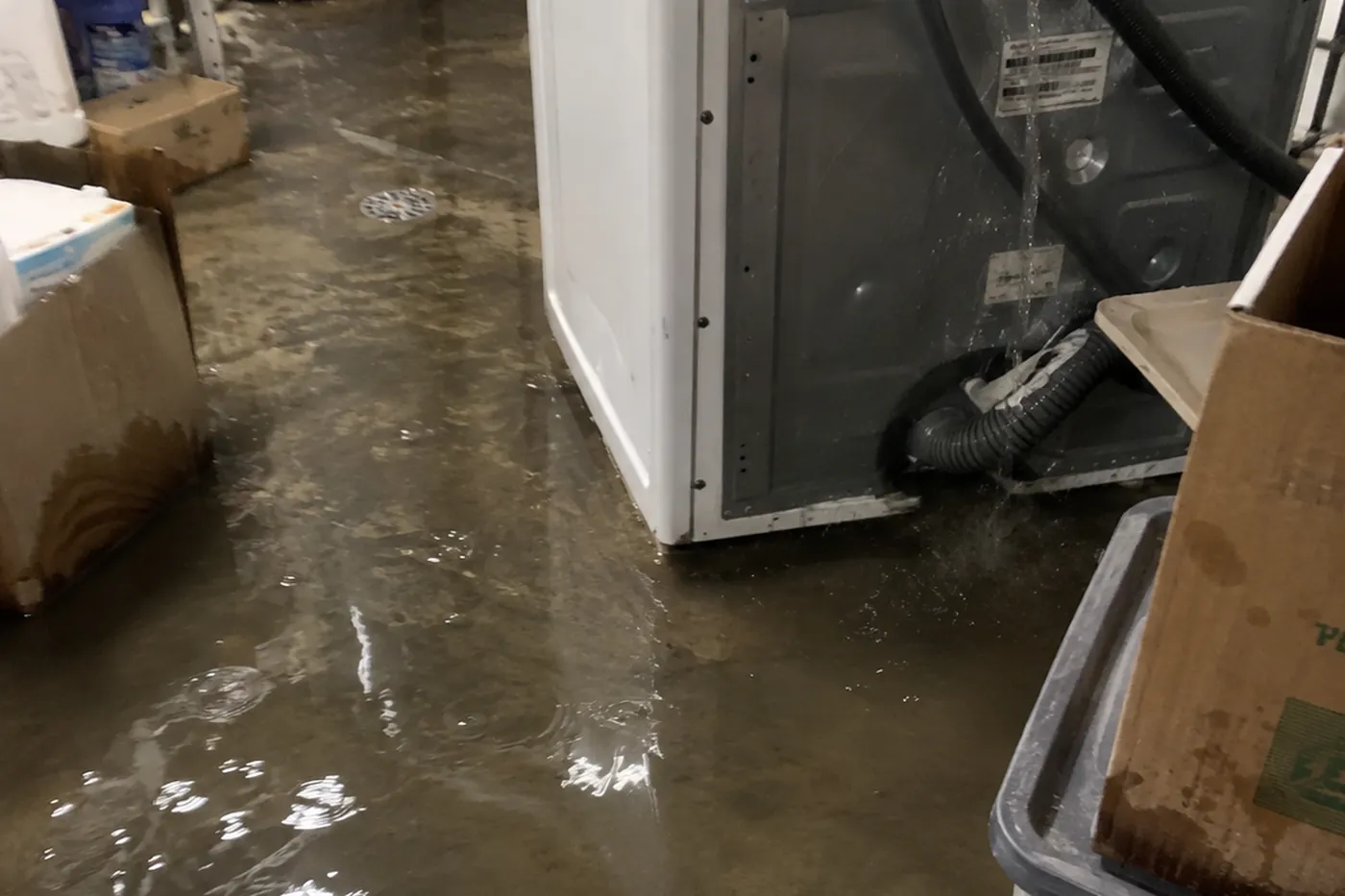
A burst washing machine supply hose is the single most common way a house floods while nobody is home, because the hose is under mains pressure every hour of every day.
(864) 515-4097 Call nowWater damage gets more expensive by the hour. Lines are answered at any time, including nights, weekends and holidays.
(864) 515-4097Useful to have ready, though none of it is required:
People assume the washing machine only carries water while it is running. The supply hoses behind it are pressurized continuously, which is why a hose failure at two in the morning or during a weekend away delivers hundreds of gallons rather than one load's worth.
A burst supply hose. The worst of the three and the most common. Rubber hoses harden and crack with age, usually within five to eight years, and when one goes it runs at full mains pressure until somebody closes the valves. Braided stainless hoses fail far less often and cost very little to fit.
A drain hose backing up or coming loose. This releases only what the machine discharges, so the volume is limited, but the water is gray water rather than clean. It has been through a wash cycle and carries detergent, soil and whatever came off the clothes.
The machine itself overfilling. Usually a failed inlet valve or water level switch. Volume sits between the other two, and the water is generally clean.
A great deal of newer Greenville housing puts the laundry on the second floor, which is convenient right up until something fails. Water goes through the floor, into the ceiling cavity below, down through wall cavities, and across the ground floor. One hose produces three separate areas to dry, and the ceiling below usually has to be opened rather than dried from one side.
Older housing with the laundry in a garage or a ground floor utility room gets off much more lightly from an identical failure.
Wash water is category 2. It is not sewage, but it is not clean either, and porous materials that have absorbed it are usually removed rather than dried. Carpet pad comes out as a matter of course. Carpet itself is sometimes recoverable depending on how long it sat.
Left long enough, category 2 water becomes category 3 as bacteria multiply, which is a genuinely different and more expensive job. The clock on that is roughly forty-eight hours in this climate, and less in July.
Close the two valves behind the machine when you go away for more than a night. Replace rubber hoses with braided stainless, which is a twenty dollar part and a ten minute job. Check behind the machine once a year for a hose that has gone hard or is bulging near the fitting.
None of that helps after the fact, but it is the cheapest insurance in the house.
Calling costs nothing, and you will get an honest answer about the need for a crew and what you can safely handle yourself.
(864) 515-4097Rubber hoses generally last five to eight years and fail more often after that. Braided stainless steel hoses last considerably longer and cost very little. If you cannot remember when yours were fitted, they are old enough to be worth replacing.
Water from a burst supply hose is clean, because it never reached the machine. Water that has been through a wash cycle is category 2 gray water, which carries detergent and soil. That distinction decides if materials can be dried in place or need to come out.
Shut the water off at the main, kill power to the affected area at the breaker, and photograph everything before moving anything. Then call. After two or three days of standing water the question shifts from drying materials to deciding which ones come out, and mold is generally established by then.
A burst hose is sudden and accidental, so the resulting damage is usually covered. A hose that has been weeping for months, or a drain that has backed up repeatedly and been ignored, may be treated as a maintenance issue instead. The documentation of what actually happened is what settles that.