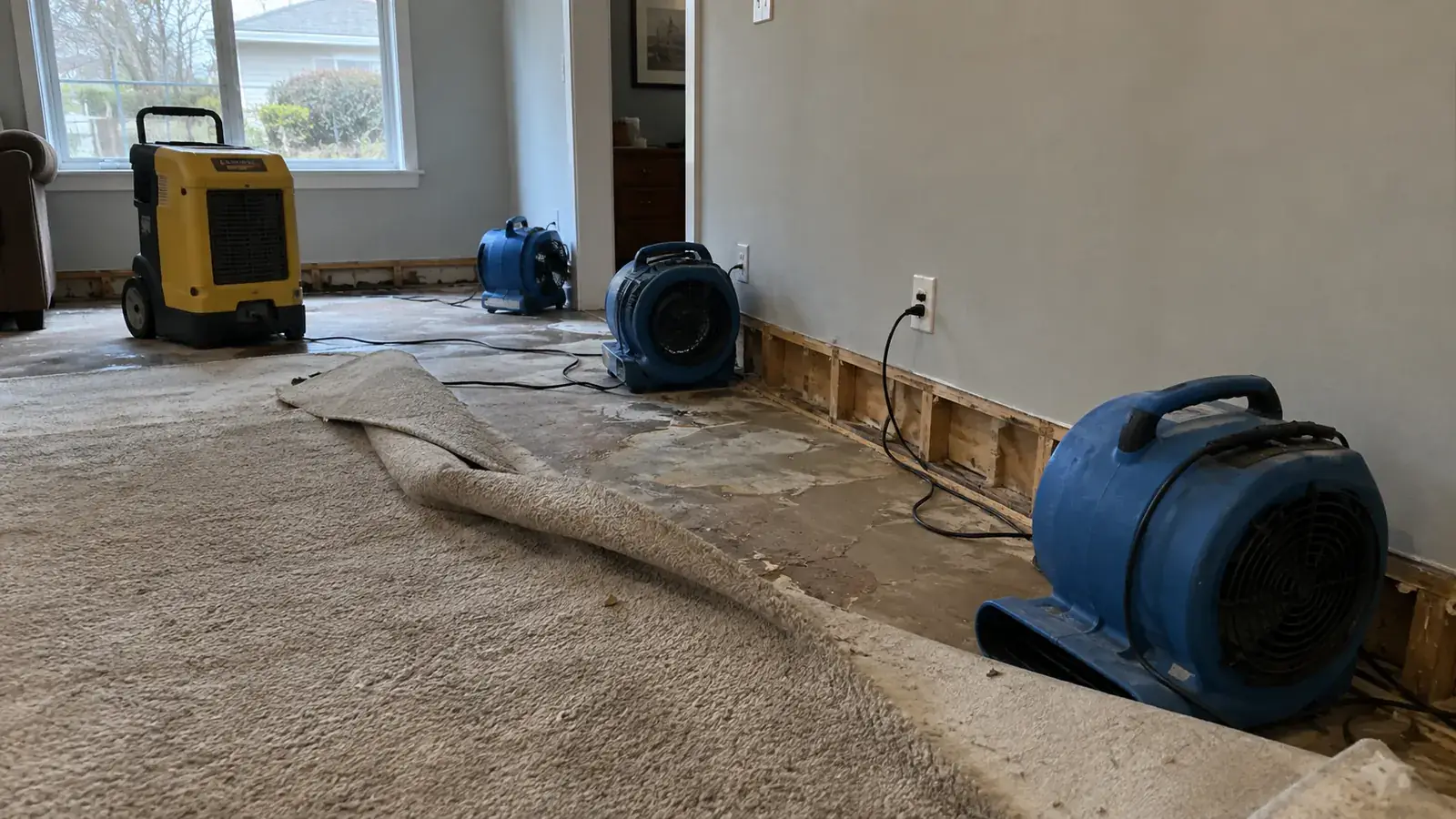
A failed water heater does not drip. It empties forty to eighty gallons onto the floor and then keeps refilling itself until somebody shuts the supply off.
(864) 515-4097 Call nowWater damage gets more expensive by the hour. Lines are answered at any time, including nights, weekends and holidays.
(864) 515-4097Useful to have ready, though none of it is required:
The reason a water heater failure is worse than most supply leaks is that it does not stop. The tank empties, the fill valve opens to replace what it lost, and the whole thing runs continuously through the split until the cold inlet is closed. A failure on a Friday evening in an unoccupied house is a different event entirely from one you catch in ten minutes.
There is a valve on the cold water line at the top of the heater. Closing it stops the refill, which stops the flood. Killing the breaker or the gas stops the heating but not the water, and that distinction costs people a great deal every year.
If you cannot reach or turn that valve, shut the house off at the main. Then cut power to the affected area at the panel if water is anywhere near outlets or the unit itself.
The same failure produces three completely different jobs depending on location.
Garage or unfinished basement. The best case. Water runs across concrete, often reaches a drain, and the structural damage is limited to whatever it reached at the edges. Still worth checking the wall plate on any shared wall with finished space.
Interior closet or utility room. The common case in Upstate housing, and the one that spreads. The heater usually sits on the finished floor with drywall on three sides, so water goes under the flooring in every direction and into the bottom plate of all the surrounding walls at once.
Attic or upper floor. The expensive case. Water goes down through the ceiling cavity, the insulation, the joists and the wall cavities before it ever appears in a room, and by the time a ceiling stains it has already wet several things you cannot see.
Most tank heaters last eight to twelve years. Past that, the failure is not a question of if but of when, and of how much warning you get. A unit that has started weeping at the base, rusting around the bottom seam or making noise when it heats is telling you something useful.
Two things reduce the size of the eventual loss and cost almost nothing: a drain pan plumbed to somewhere sensible, and knowing where that cold inlet valve is before the day you need it.
Tank water is clean water on release, which means materials can often be dried in place rather than removed. That advantage expires. Once it has been sitting in carpet pad and wall cavities for a day or two in Upstate humidity it is no longer a clean water loss in any practical sense, and the scope of work changes with it.
Calling costs nothing, and you will get an honest answer about the need for a crew and what you can safely handle yourself.
(864) 515-4097It is a warning. A weeping seam or a damp base usually means the tank is failing rather than a fitting being loose, and tanks that have started to go rarely stop. Shut the cold inlet valve and have it looked at rather than waiting to see if it gets worse.
The tank capacity first, so typically forty to eighty gallons, then however much the fill valve delivers afterward. The second number is the one that matters. A failure that runs unattended for a day puts out far more than the tank ever held.
The resulting water damage is usually covered because a tank failure is sudden and accidental. The heater itself is a different question and often is not, since that falls under wear and maintenance. Gradual seepage that has been going on for months is also generally excluded, which is why the timeline matters.
Often, if the water was clean and drying starts early. Tank water is clean on release, so the question is how long it sat and what the flooring is made of. Engineered plank and laminate have a shorter window than solid hardwood or tile. Carpet pad is nearly always removed regardless.