Extraction and structural drying across Berea, where a large share of the housing is rented and a water loss usually involves a tenant, a landlord and an insurer all at once.
(864) 515-4097 Call nowWater damage gets more expensive by the hour. Lines are answered at any time, including nights, weekends and holidays.
(864) 515-4097Useful to have ready, though none of it is required:
Berea is unincorporated Greenville County just northwest of downtown, and it carries a higher proportion of rental and investment property than the towns further out. That changes the practical question after a water loss: not just what needs drying, but who is responsible for arranging it.
In an owner-occupied house the decision is simple. In a rental it frequently is not, and the hours lost working that out are the same hours the damage is spreading. As a general position in South Carolina, the structure is the landlord's responsibility and the tenant's belongings are the tenant's, but your lease is the document that governs and it may say otherwise.
The practical advice is the same either way: stop the source, photograph everything before anything is moved, and notify the other party in writing the same day. Mitigation should not wait for the responsibility question to be settled, and most leases and policies expect you not to let it.
Documentation matters more here than almost anywhere. Moisture readings and dated photographs taken on arrival give both parties the same factual record, which tends to shorten the disagreement considerably.
Berea does not have a single dominant construction era. Mid-century ranches on crawl spaces sit near newer infill on slabs, and plenty of the older stock has been converted to rental and modified along the way. Additions built at different times often mean two roof lines, two plumbing eras and a junction between them where water finds its way in.
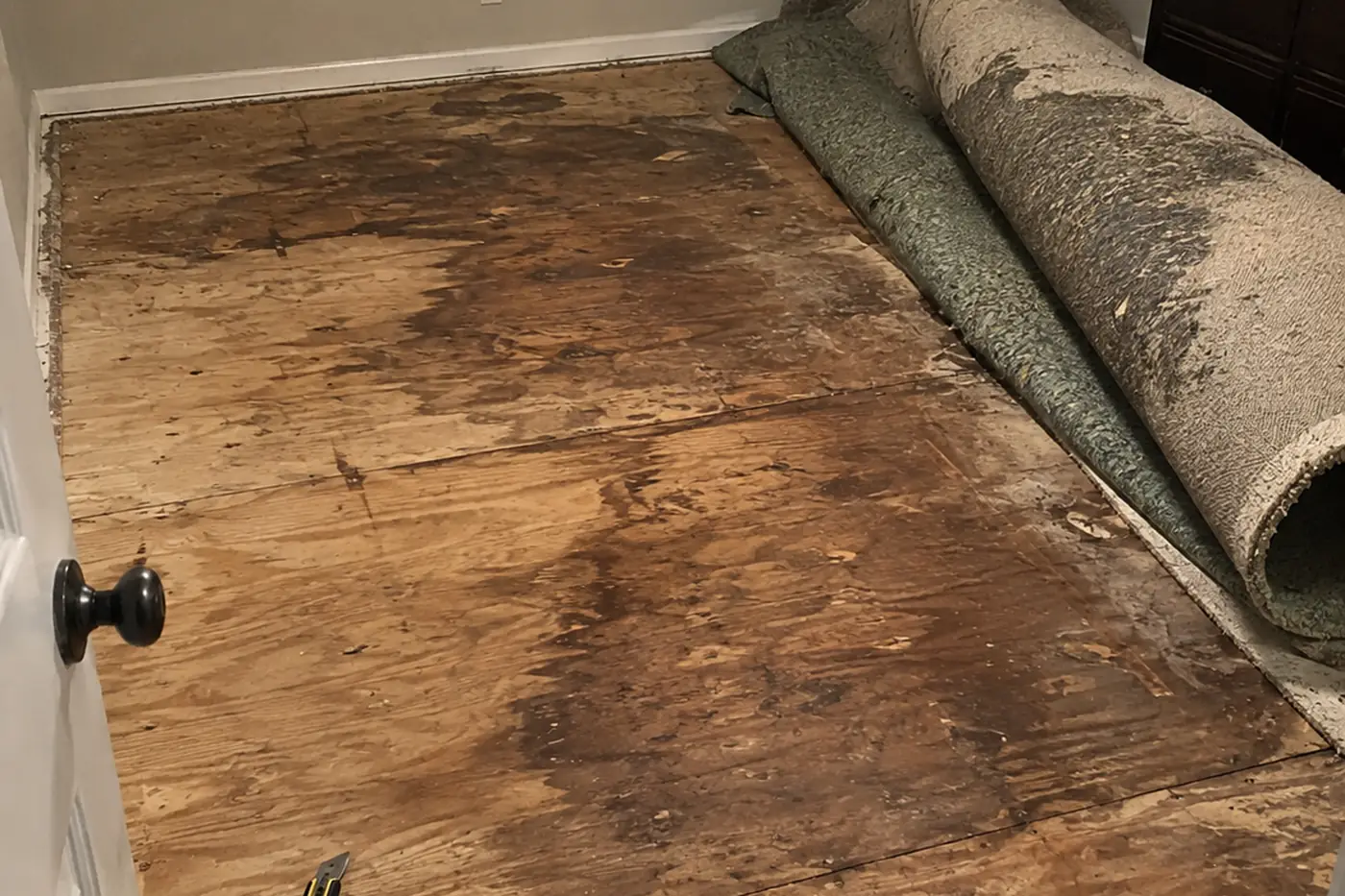
The worst water losses we see in rental property are not the biggest ones. They are the ones in a vacant unit between tenancies, where a supply line fails on a Friday and nobody opens the door until the following week. A loss that would have been a three-day dry-out becomes a demolition job, and it happens on a schedule nobody is watching.
If you hold property here and a unit is sitting empty, shutting off the water at the main between tenancies costs nothing and removes the single most expensive failure mode in the whole portfolio.
Calling costs nothing, and you will get an honest answer about the need for a crew and what you can safely handle yourself.
(864) 515-4097Yes, including Berea itself, the White Horse Road corridor, Sulphur Springs and the surrounding unincorporated parts of Greenville County northwest of downtown.
Your lease governs it. As a general position in South Carolina the structure is the landlord's responsibility and the tenant's personal belongings are covered by the tenant's own renters insurance, but leases vary. Whatever the answer, photograph everything, notify the other party in writing the same day, and do not let the question delay stopping the source.
Get the water stopped and get someone documenting the condition before anything is moved or thrown out. Dated moisture readings and photographs protect you with your insurer and with the tenant. If the unit is vacant, check it before deciding it is not urgent, because vacant-unit losses are almost always worse than they first appear.
Some of it usually is, but the scope changes completely. After a week of standing water the question shifts from drying materials to deciding which ones come out, and mold growth is generally established by then. It is still worth an inspection rather than assuming the worst, because what is actually wet is often less than it looks and occasionally more.