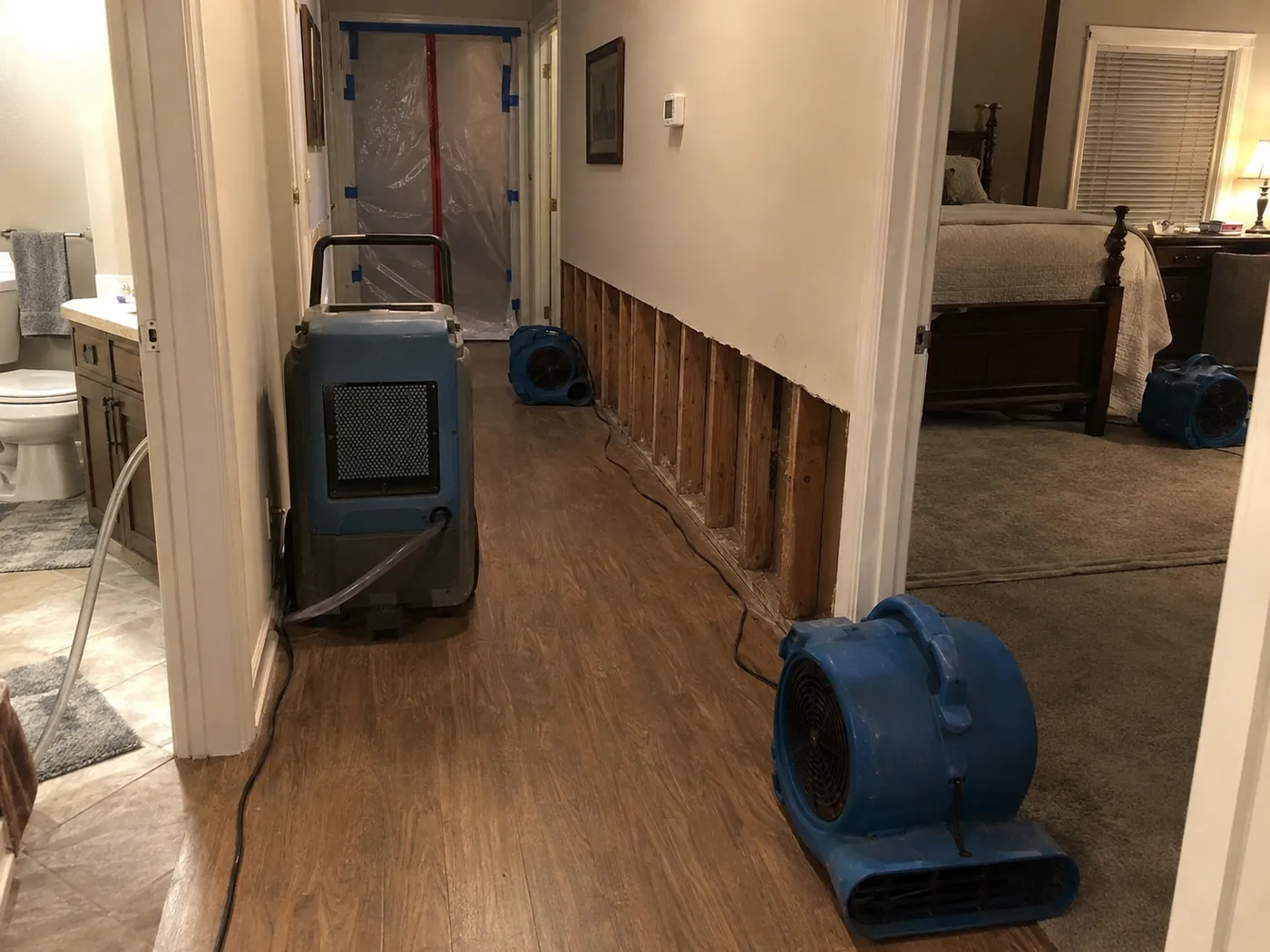
Extraction removes the water you can see. Drying removes the water inside the building, which is the part that decides if this becomes a mold job.
(864) 515-4097 Call nowWater damage gets more expensive by the hour. Lines are answered at any time, including nights, weekends and holidays.
(864) 515-4097Useful to have ready, though none of it is required:
Structural drying is the unglamorous middle of a water loss and the part homeowners most often try to do themselves. It is also where the outcome is actually determined. A property that was extracted well and dried badly ends up in the same place as one that was never touched, only later and with more certainty.
A box fan moves room air across a surface. That evaporates moisture from the top layer of a material into the room, which makes the surface feel dry within a day. It does nothing about the water inside the wall cavity, in the bottom plate, or under the finish flooring, and the moisture it does evaporate has nowhere to go. It raises the humidity of the room, and in an Upstate summer the room was already humid.
Proper drying uses two pieces of equipment doing two different jobs. Air movers are aimed along wet surfaces at an angle to break the layer of saturated still air sitting against them, which is what actually limits evaporation. Dehumidifiers then pull that released moisture out of the air and drain it away, so the room gets drier rather than just warmer.
The number of air movers and the capacity of the dehumidifier are calculated from the volume of the affected space and the class of the loss. Too little equipment means materials never reach the drying rate needed and the job stalls. Too much means noise and power draw for no gain. Getting this right is the difference between three days and three weeks.
Equipment stays until moisture meters read at the documented dry standard for each material, compared against an unaffected area of the same building rather than against a number in a book. Readings are taken daily and logged. Nothing is called dry because a set number of days has passed.
That log is also what goes to your adjuster. It is the evidence that the structure reached dry, which protects you if a mold question is raised months later.
Calling costs nothing, and you will get an honest answer about the need for a crew and what you can safely handle yourself.
(864) 515-4097Three to five days for a typical single-room loss with clean water. Longer where hardwood, plaster, crawl spaces or multiple rooms are involved. Hardwood in particular can run a week or more because water has to come out through the face of the board.
No. Drying is continuous, and switching equipment off lets moisture redistribute through the material overnight, undoing part of the previous day's progress. The equipment is noisy and it is meant to run the whole time.
A typical setup adds a noticeable but not dramatic amount to a power bill for the days it runs. On an insured loss this is often reimbursable. Ask for it to be noted in the scope so it is not overlooked at settlement.
Moisture meters read the water content of each material and are compared against the same material in an unaffected part of the building. When the affected readings match the dry standard and hold there, the structure is dry and equipment comes out.