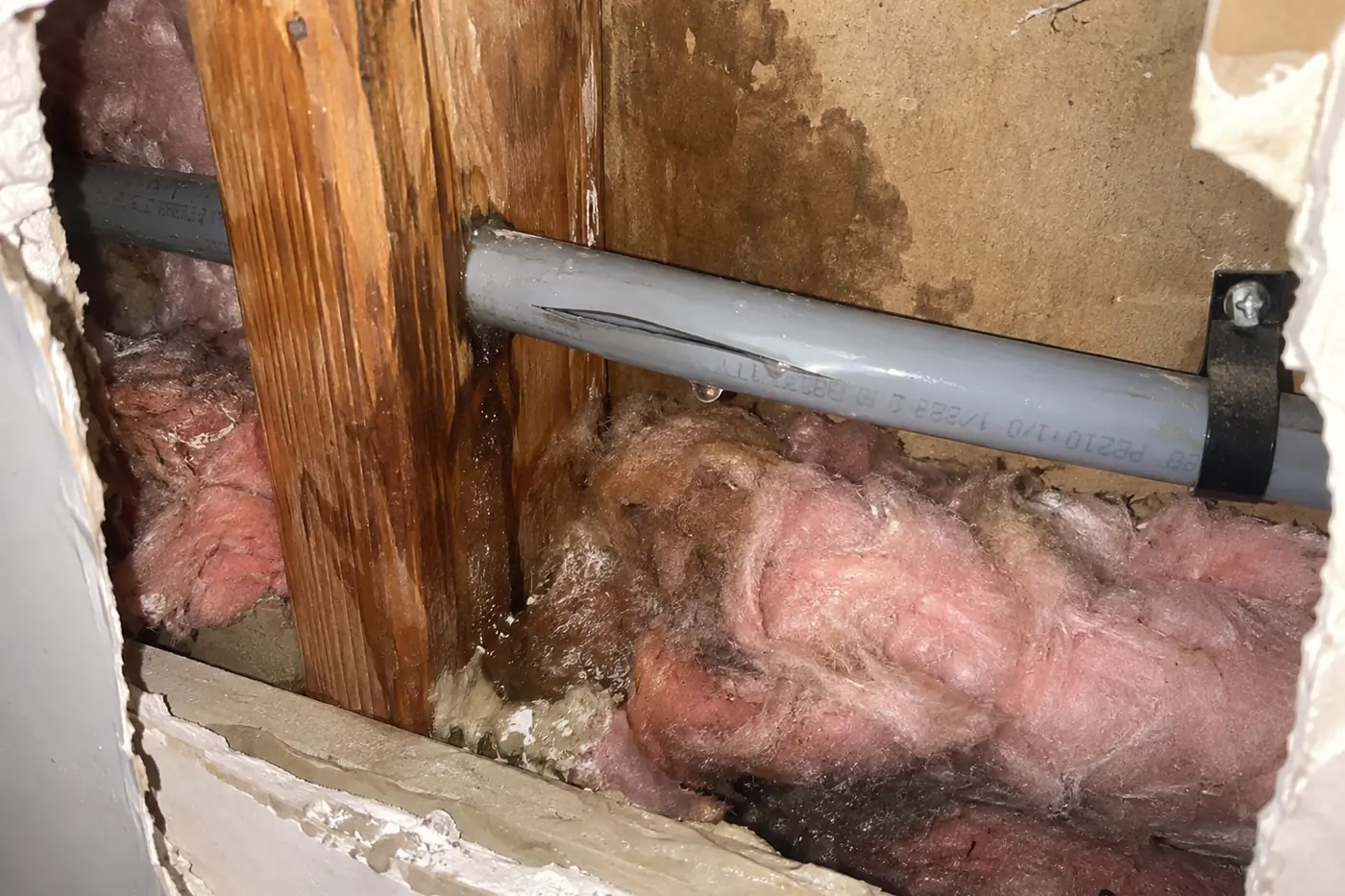
Polybutylene is gray plastic supply pipe installed in an estimated six to ten million American homes between 1978 and 1995. It degrades from the inside, which is why the first sign of trouble is usually the failure itself.
(864) 515-4097 Call nowWater damage gets more expensive by the hour. Lines are answered at any time, including nights, weekends and holidays.
(864) 515-4097Useful to have ready, though none of it is required:
Polybutylene does not leak the way copper leaks. Copper corrodes slowly and usually weeps before it bursts, so you get a stain, a damp patch, a warning. Polybutylene degrades from the inside where nobody can see it, holds pressure until it cannot, and then releases everything at once.
Look at the pipe where the main supply enters the house, at the water heater connections, and under sinks. Polybutylene is gray, flexible plastic, roughly half an inch or three quarters of an inch across, and most of it is stamped PB2110 along its length. Outdoors it was sometimes blue or black.
It is easy to mistake for modern PEX, which is also flexible plastic and is perfectly sound. PEX is usually white, red or blue and carries different markings. If you find gray plastic supply pipe and the house was built or re-plumbed between roughly 1978 and 1995, it is worth having a plumber confirm what you are looking at.
Chlorine and other oxidants in ordinary treated municipal water attack the resin from the inside. Microscopic cracks form on the inner wall, work outward under pressure, and eventually reach the surface. None of that is visible from the outside, and none of it shows up on a home inspection.
The acetal plastic fittings used in much of the original installation degrade the same way and often go first. This is why polybutylene failures cluster at joints, behind walls and above ceilings, where a slow release can run for hours before anyone notices.
A polybutylene failure is a sudden and accidental event, and it is generally treated as one. That usually puts the resulting water damage on the covered side of the line, the same as any other burst supply line.
The complication is on the other end. Some carriers will not write a new policy on a house that still has polybutylene supply plumbing, and some will decline to renew once they find out. That is a decision about the pipe, not about the claim. If you are buying a house with it, that conversation is worth having with an agent before closing rather than after.
The class action settlement that once funded replacements, which arose from litigation in the 1990s, closed to new claims years ago. Replacement now comes out of the homeowner's pocket or a policy that happens to cover it.
Shut the water off at the main. On most houses the valve is where the supply enters, often in a crawl space, a garage or a utility closet, and knowing where it is before you need it saves the most expensive minutes of the whole event.
Kill power at the breaker to any area where water is near outlets, cords or a panel. Then get the water out, because from that point the cost of the loss is set by how many hours it sits rather than by how much came out of the pipe.
Repairing the section that failed is a plumbing job. Drying the structure it emptied into is a different job, and the two are usually done by different people on the same day.
Housing built in the Greenville area during that window carries it in meaningful numbers, and Mauldin in particular has a lot of late 1970s to mid 1990s stock. Simpsonville and parts of Greer have it too.
If you own one of those houses and the supply plumbing has never been touched, finding out what it is made of is a twenty-minute job that can save you a five-figure one. We handle the water damage side across Greenville County, and we will tell you honestly when a loss is small enough to handle yourself.
Calling costs nothing, and you will get an honest answer about the need for a crew and what you can safely handle yourself.
(864) 515-4097Look for gray flexible plastic supply pipe, usually stamped PB2110, at the water heater, under sinks or where the main enters the house. Houses built or re-plumbed between about 1978 and 1995 are the ones to check. Modern PEX is also flexible plastic but is normally white, red or blue and is not the same material.
The water damage from a sudden burst is usually treated like any other supply line failure and is generally covered. The separate issue is that some carriers will not write or renew a policy on a house that still has polybutylene plumbing, which is a decision about the pipe rather than about a particular claim.
A failed section can be repaired, and plumbers do it routinely. The difficulty is that the rest of the system has aged under the same conditions, so a repair addresses the piece that already failed rather than the ones that have not yet. Re-piping is a plumbing and budget decision, not a restoration one.
The concern with polybutylene is structural failure rather than water quality. It was approved for potable water when it was installed. The reason it matters is that it bursts without warning, not that it contaminates the supply.
It is not always visible. Much of the pipe runs inside walls and under floors, and a standard home inspection may only see the short runs at the water heater or under a sink. If those sections were replaced at some point and the rest was not, the house can look re-plumbed when it is not.