Extraction and structural drying across Fountain Inn, a town where a hundred-year-old mill house and a three-year-old subdivision can sit a mile apart and need completely different work.
(864) 515-4097 Call nowWater damage gets more expensive by the hour. Lines are answered at any time, including nights, weekends and holidays.
(864) 515-4097Useful to have ready, though none of it is required:
Fountain Inn has grown faster in the last decade than almost anywhere else on the Golden Strip, and the result is a town with two entirely separate housing stocks. Which one you live in decides what a water loss costs you.
The streets around the historic downtown and the old Fountain Inn mill village carry housing that predates the Second World War. Plaster over wood lath instead of drywall, solid hardwood over plank subfloor, brick piers and crawl spaces, and plumbing that has been repaired in three or four different eras.
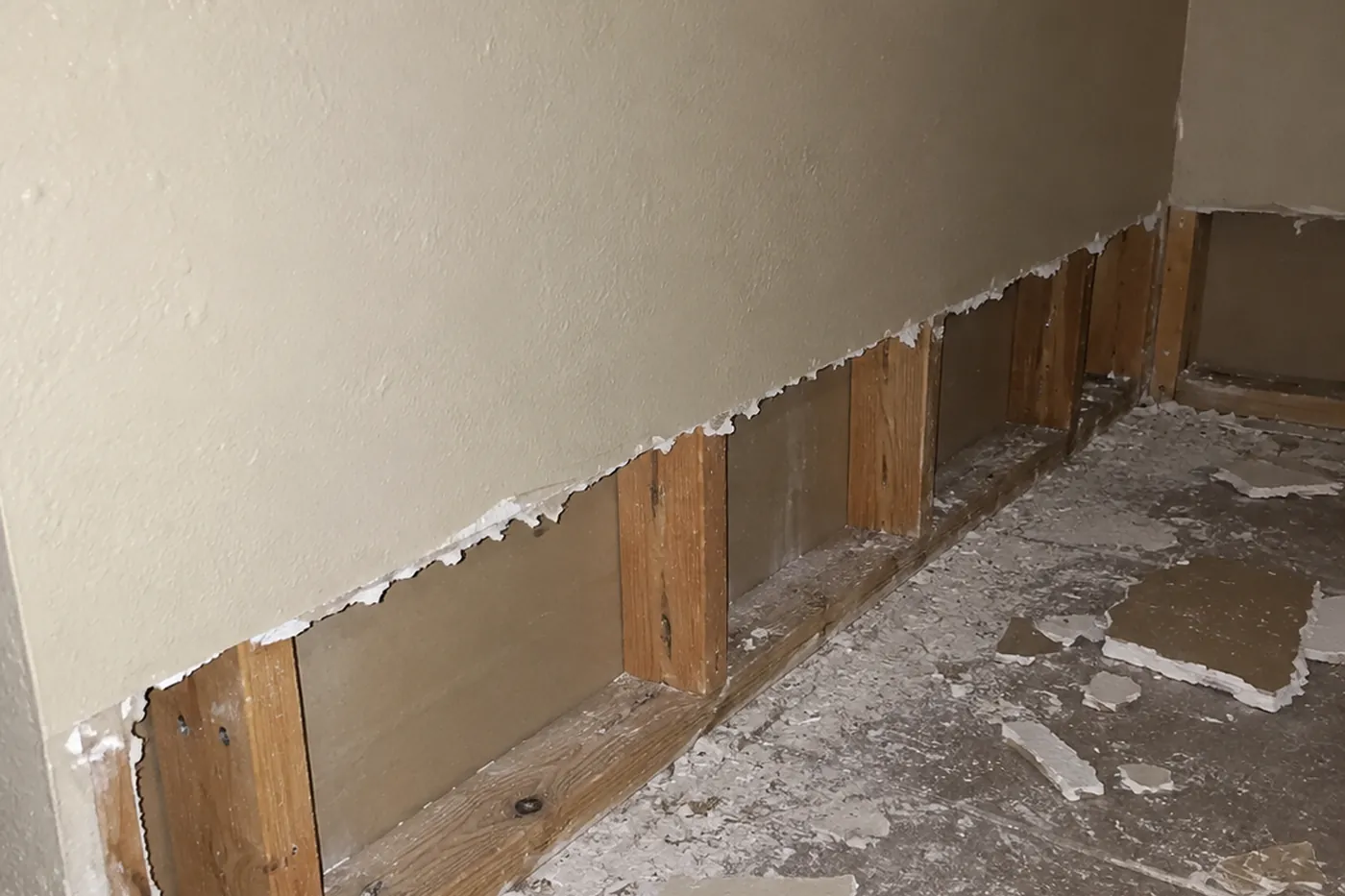
Plaster behaves differently from drywall when it gets wet. It holds water longer, it can look sound while the lath behind it is saturated, and it tends to let go in sheets rather than crumbling at the edge. Drying it in place is possible and usually worth attempting, but the decision has to be made with meters rather than by eye, and it has to be made quickly.
Everything built out toward Fairview Road and the Laurens County line in the past twenty years is a different job. Slab construction, engineered flooring, two stories, more bathrooms and longer supply runs. Water from an upstairs failure reaches the ceiling below and spreads laterally under flooring the homeowner cannot see under.
Newer also means tighter. Modern building envelopes hold moisture in more effectively than a leaky 1940s house did, so the same volume of water often needs more equipment time, not less.
Fountain Inn sits partly in Greenville County and partly in Laurens County, which occasionally matters for permitting on larger reconstruction work. For mitigation and drying it makes no practical difference, and both sides of the line are covered.
Calling costs nothing, and you will get an honest answer about the need for a crew and what you can safely handle yourself.
(864) 515-4097All of it, on both the Greenville County and Laurens County sides, including the historic downtown, the old mill village streets, Fairview Road and the newer developments running toward Simpsonville.
It changes the timeline. Plaster holds water longer than drywall and can look sound while the wood lath behind it is saturated. It is often possible to dry plaster in place rather than remove it, but that decision is made with moisture readings early on. Left a week, the option usually disappears.
Usually a section of it. Water sitting on top of a ceiling has wet the drywall from above, the insulation in the cavity and often the joists. Drying from the room side alone leaves the cavity wet, which is the common route to a mold claim a month or two later.
Not necessarily harder, but different. Older houses leak air, which helps a little, though plaster and solid hardwood are less forgiving materials. Newer houses are sealed tighter, so moisture has fewer ways out on its own and equipment often runs longer.