Extraction and structural drying across Simpsonville and Five Forks, where most of the housing stock is newer, larger, and built over a slab.
(864) 515-4097 Call nowWater damage gets more expensive by the hour. Lines are answered at any time, including nights, weekends and holidays.
(864) 515-4097Useful to have ready, though none of it is required:
Simpsonville grew fast and grew recently. Much of what sits in Five Forks, Bells Crossing and the developments off Harrison Bridge went up in the last thirty years, and that shapes how water moves through it.
Newer construction here tends to be two stories with a larger footprint and more bathrooms than the older Upstate housing stock. That means more supply lines, more fixtures, and a longer distance between where a failure starts and where anybody notices it. An upstairs bathroom line that lets go over a weekend can reach the ceiling below, the wall cavity, and the subfloor of two rooms before anyone opens the door.
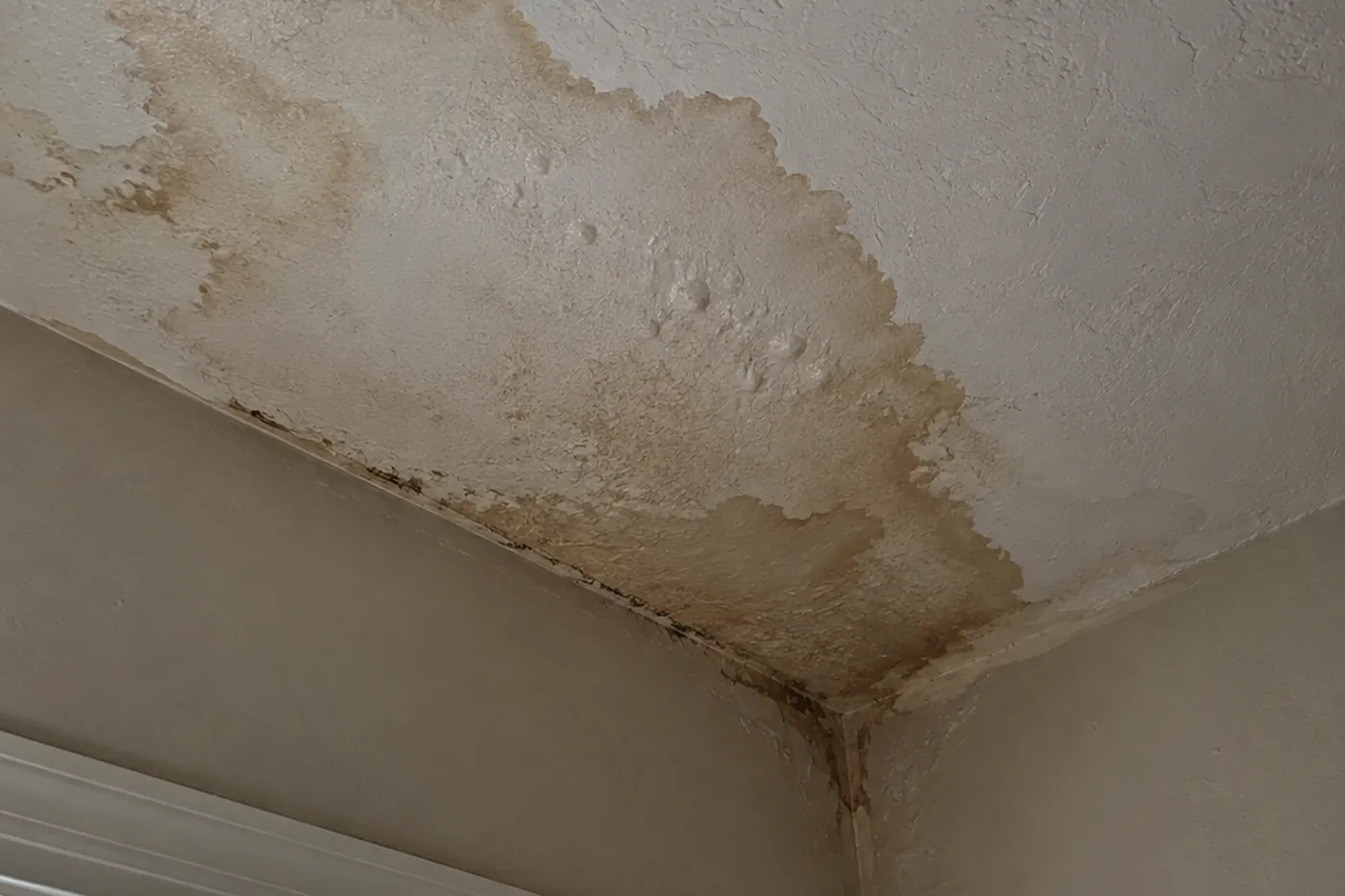
Second-floor losses are the recurring pattern in Simpsonville, and they are the ones where the ceiling below has to be opened rather than dried from one side. Water sitting on top of drywall inside a ceiling cavity does not evaporate out through paint.
Slab-on-grade with engineered hardwood or luxury vinyl over it is the common combination. Both spread water laterally underneath rather than letting it drain, and both hide it well. The visible wet patch is routinely a fraction of the actual wet area, which is why the meters come out before anything is pulled up.
Tighter modern construction holds moisture in more effectively than older leaky houses did. The same amount of water in a 2015 build often takes longer to dry than in a 1960 ranch, because there is less incidental air exchange helping you. Equipment sizing matters more here, not less.
Calling costs nothing, and you will get an honest answer about the need for a crew and what you can safely handle yourself.
(864) 515-4097All of it, including Five Forks, Bells Crossing, Harrison Bridge, Neely Farm, and the Golden Strip corridor through to Fountain Inn.
Usually a section of it does. Water that has pooled on top of a ceiling has wet the drywall from above, the insulation in the cavity, and often the joists. Drying it from the room side alone leaves the cavity wet, which is the classic route to mold four to six weeks later.
The plank itself may be, since vinyl does not absorb water. The problem is what is underneath it. Water spreads across the slab beneath LVP and stays there, and the bottom plate of the walls sits in it. The floor looking fine is not evidence that the structure is.
No, and often the opposite. Modern construction is sealed more tightly, so moisture that gets in has fewer ways out on its own. Newer houses frequently need more equipment time, not less.