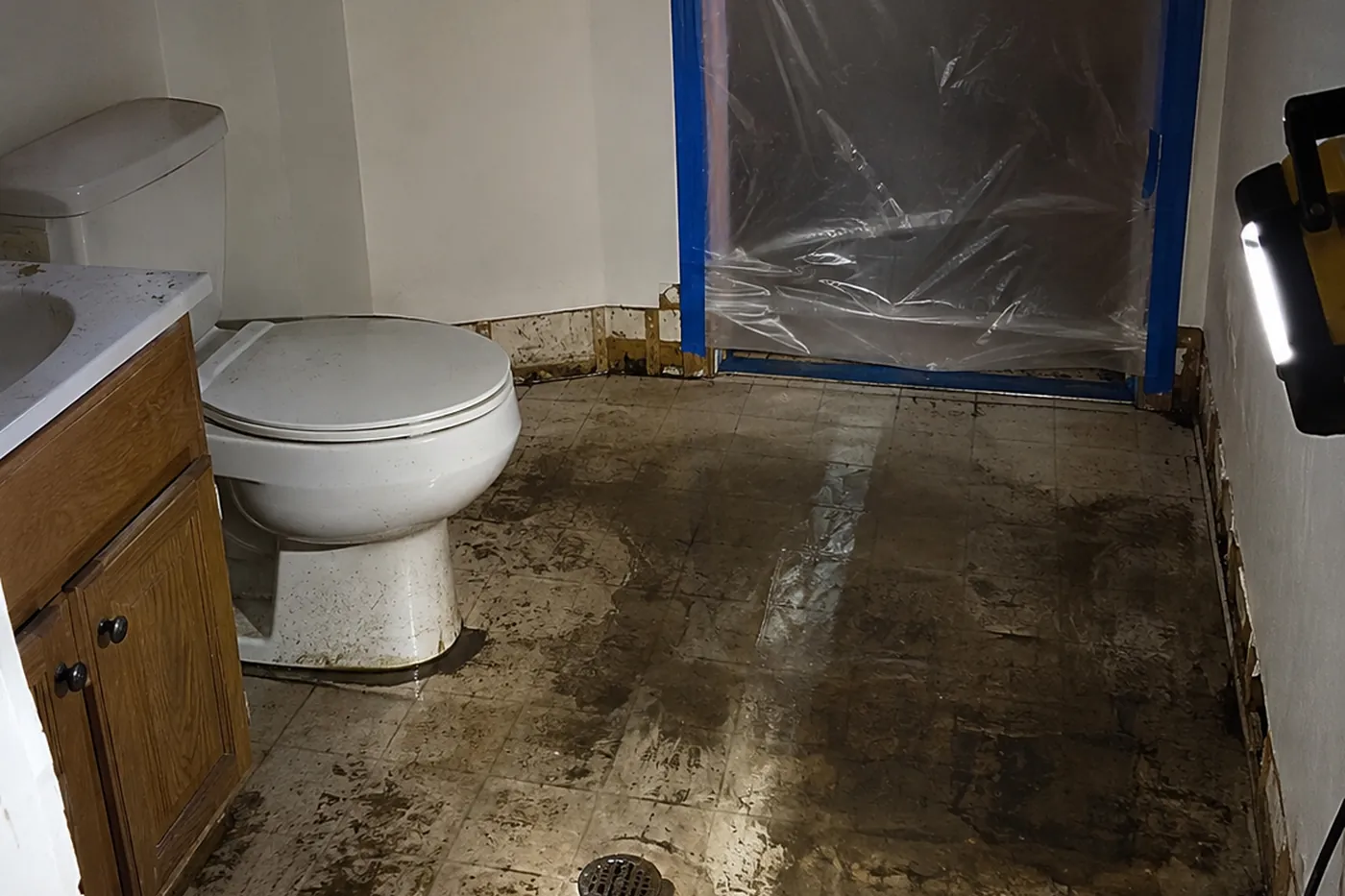
A sewage backup is a health problem before it is a building problem. It is handled under containment, and most of what it touched does not get dried, it gets removed.
(864) 515-4097 Call nowWater damage gets more expensive by the hour. Lines are answered at any time, including nights, weekends and holidays.
(864) 515-4097Useful to have ready, though none of it is required:
Sewage is classified as Category 3 water, which in practice means it is treated as grossly contaminated regardless of how it looks or smells. The response is different from every other kind of water loss, and the difference is not cosmetic.
With clean water the goal is to dry materials in place and save them. With sewage the goal is to get contaminated porous material out of the building. Carpet and pad come out. Drywall is cut back above the contamination line. Wet insulation is removed. Particleboard and MDF that absorbed it are discarded, because they cannot be cleaned through.
Hard non-porous surfaces are cleaned and treated with an antimicrobial. Framing and subfloor are cleaned, treated and then dried and verified with meters like any other loss. What stays is what can actually be cleaned.
Before anything is removed, the affected area is sealed off with plastic sheeting and put under negative air pressure so that aerosolised contamination does not travel into clean parts of the house through the act of cleaning it. Crews work in protective equipment. This is the step homeowners most often skip when they attempt it themselves, and it is the reason a bathroom backup ends up affecting bedrooms.
With most water losses there is a reasonable homeowner version. With sewage there is not. The exposure risk is real, household cleaning products do not address it, a wet vac aerosolises it, and material that looks fine after wiping down is still contaminated inside. If it has already happened, keep people and pets out of the area, do not run the HVAC system, and do not walk from the affected area through the rest of the house.
Main line blockages from root intrusion are the most common, particularly in older neighborhoods with mature trees over the lateral. Municipal backups during heavy rain push water back up through the lowest fixture in the house. Failed sump pumps and blocked floor drains account for most of the rest.
Calling costs nothing, and you will get an honest answer about the need for a crew and what you can safely handle yourself.
(864) 515-4097Often only if you have a specific water backup or sewer backup endorsement, which many standard policies exclude by default and sell as an add-on. Check your declarations page for that endorsement. It is inexpensive and worth adding before you need it.
It is not advisable at any size. The risk is biological rather than structural, household products do not address it, and cleaning without containment spreads contamination into unaffected rooms. If it is confined to a hard-floored area you can keep people out of it and ventilate, but leave the cleanup to equipped crews.
Yes, once the contaminated material is out and the structure is cleaned and dried. Persistent odour after a cleanup usually means porous material was dried in place rather than removed, or that the contamination reached a cavity nobody opened up.
Removal and cleaning is usually one to two days. Drying and verification runs three to five days after that. Rebuilding what was removed happens afterwards and is a separate job on its own timeline.