Mold is a symptom. Removing it without finding the water that fed it means doing the same job again in a few months.
(864) 515-4097 Call nowWater damage gets more expensive by the hour. Lines are answered at any time, including nights, weekends and holidays.
(864) 515-4097Useful to have ready, though none of it is required:
Mold needs moisture, and in this climate it needs very little. Given sustained wet material, growth generally begins within 24 to 48 hours. That timeline is why water losses that were dried promptly rarely become mold jobs, and why losses that sat over a weekend often do.
Any remediation that does not start by identifying and stopping the moisture source is temporary. A wall that is cleaned and repainted over an active leak looks resolved for a few weeks. The most common sources found are an unresolved plumbing leak, a crawl space holding moisture, condensation on cold surfaces in summer humidity, and a previous water loss that was dried at the surface but not through the structure.
The affected area is sealed off with sheeting and put under negative air pressure so that disturbing growth does not distribute spores through the rest of the house. Crews work in protective equipment.
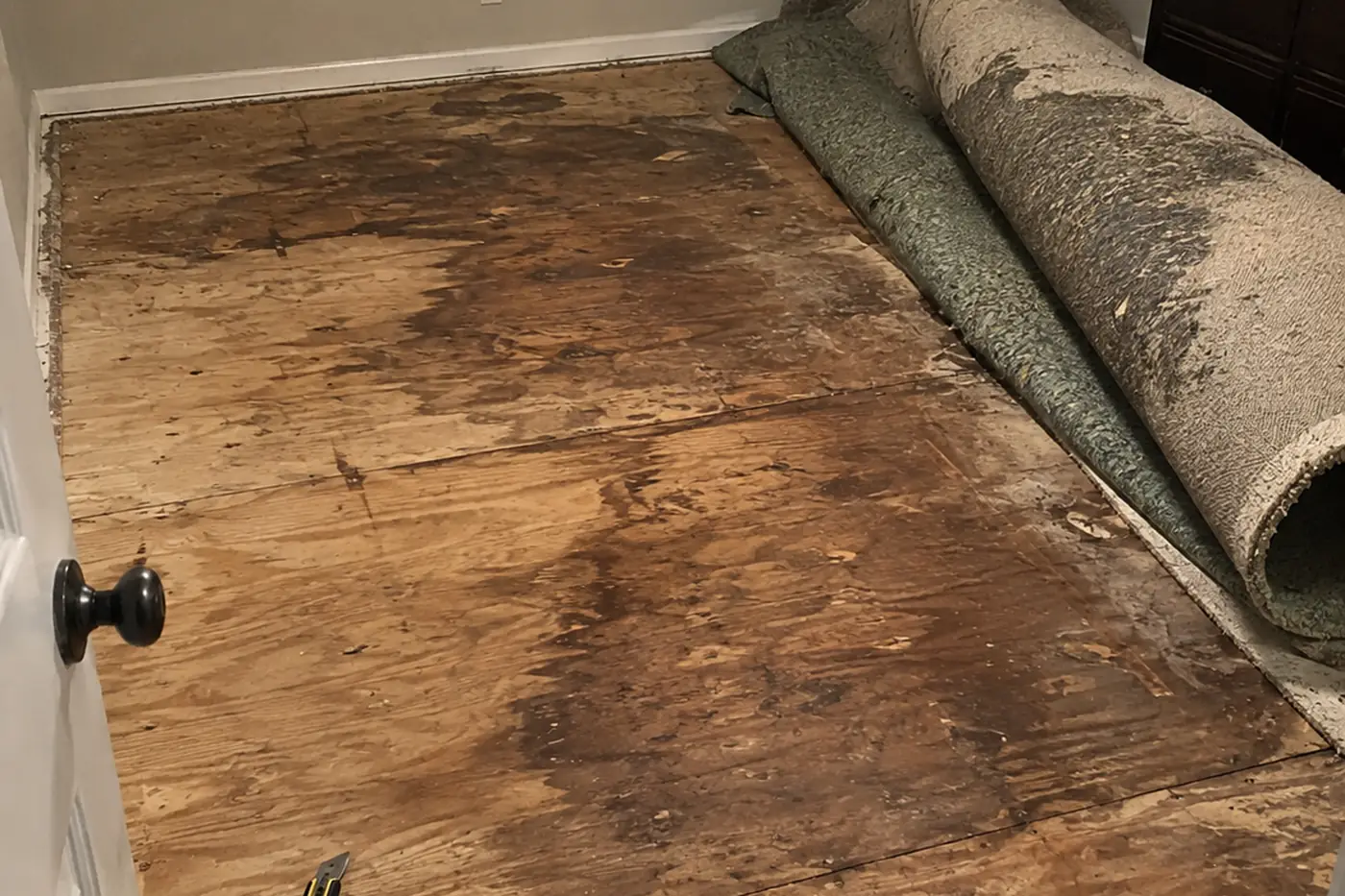
Affected porous material is removed rather than treated. Drywall, insulation and carpet that have growth through them are cut out and bagged inside the containment. Hard surfaces and framing are cleaned back and treated. The area is then dried to a documented standard, because leaving moisture behind guarantees a return.
Fogging or spraying a biocide without removing affected material is not remediation. It kills what it touches on the surface and leaves the colonized material in the wall.
Visible growth with a known water source does not usually need a test before work starts. Testing is worth paying for when you need to confirm a problem exists at all, when a sale or a tenancy dispute is involved, or when you want post-remediation verification that the work succeeded. In those cases an independent assessor rather than the remediation contractor is the right call, so that the person verifying the work is not the person who did it.
Mold remediation and water damage restoration are separate jobs with separate scopes, even when the same event caused both. If you are dealing with an active water loss, drying to standard usually prevents the mold job entirely, which is the cheaper path by a wide margin.
Calling costs nothing, and you will get an honest answer about the need for a crew and what you can safely handle yourself.
(864) 515-4097Generally 24 to 48 hours of sustained moisture is enough to start growth, and Upstate humidity shortens rather than extends that. Water reached and dried within the first day rarely becomes a mold problem. Water that sat over a weekend often does.
In practice the remediation is the same regardless of species: contain, remove affected porous material, clean what remains, fix the moisture. Identifying the species changes very little about the work, which is why testing is usually about documentation rather than method.
Sometimes, and usually with a cap, when the mold resulted directly from a covered sudden water loss that was mitigated promptly. Mold from a long-running leak or from humidity is generally excluded as a maintenance issue. Many policies cap mold coverage at a set amount regardless.
On a hard non-porous surface, a small amount of surface growth can be cleaned. On drywall or anything porous, bleach whitens the surface without reaching what has grown into the material, and the growth returns. Anything beyond a small patch, or anything with an unresolved water source behind it, needs proper removal.