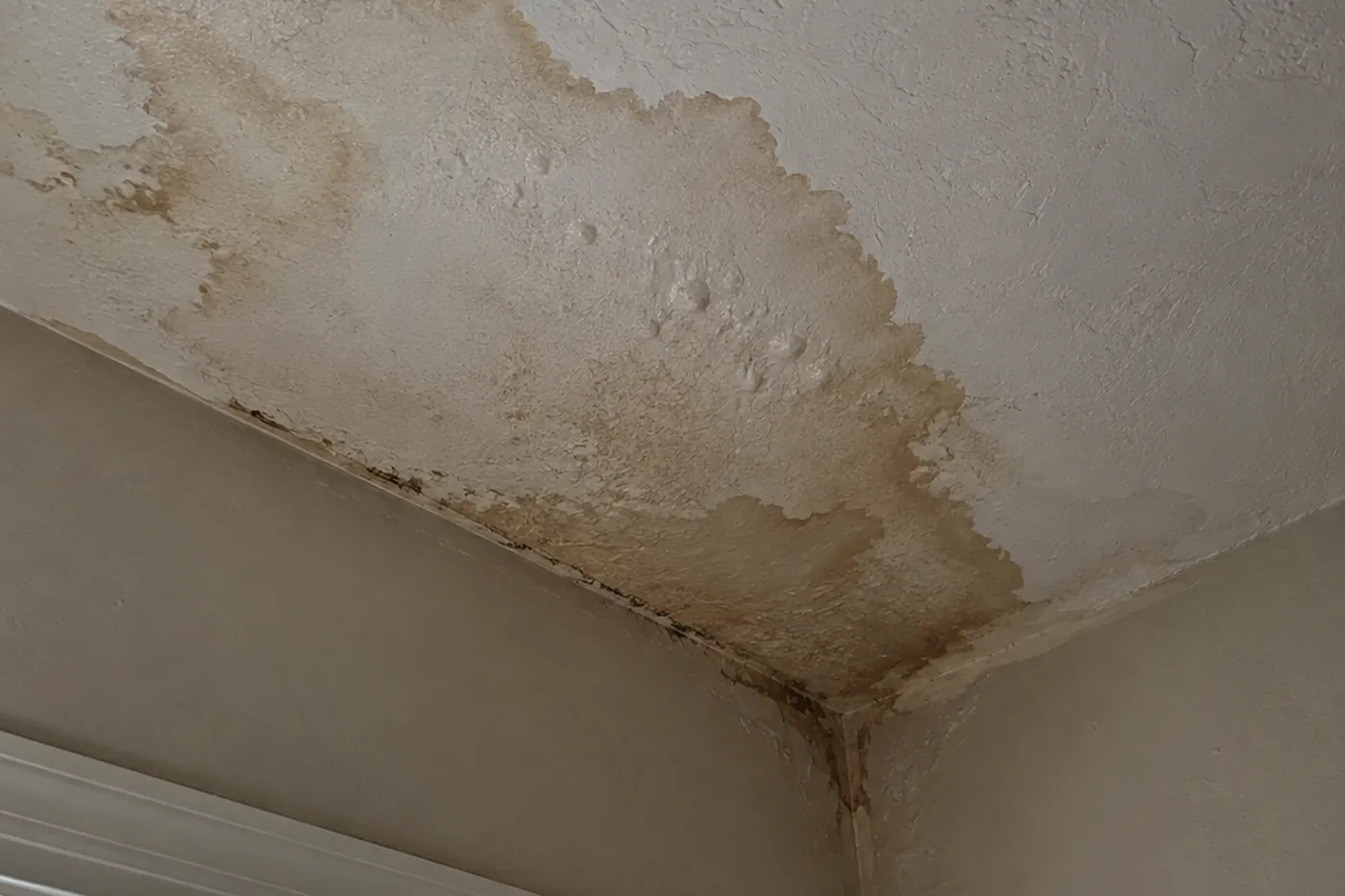
Your air conditioner pulls gallons of water out of the air on a humid Upstate day and drains it away through a narrow plastic pipe. When that pipe blocks, the water has to go somewhere else.
(864) 515-4097 Call nowWater damage gets more expensive by the hour. Lines are answered at any time, including nights, weekends and holidays.
(864) 515-4097Useful to have ready, though none of it is required:
This is the water loss almost nobody expects, and in South Carolina it is one of the most common. A working air conditioner is a dehumidifier that happens to also cool the air. On a humid July day a residential system can pull ten to twenty gallons of condensate out of the air, and all of it leaves through one small PVC line.
The drain pan sits in a dark place, permanently damp, at a temperature algae and biofilm enjoy. Over a season that growth builds up inside the line until it slows and then stops. The pan fills, overflows, and the water goes wherever gravity takes it.
It happens gradually, which is the problem. A burst pipe announces itself. A blocked condensate line puts out a steady trickle for days or weeks into a ceiling cavity, a wall or the insulation above a bedroom, and the first sign is usually a stain that appears long after the wetting started.
A great many Upstate houses put the air handler in the attic, which means any overflow drains directly into the ceiling below. Insulation soaks it up and holds it against the ceiling drywall, and because the space is unconditioned and dark the moisture sits there at exactly the humidity mold prefers.
By the time a brown ring shows on a bedroom ceiling, the drywall above it, the insulation around it and often the joists have been wet for some time. This is the reason condensate losses so frequently turn into mold work while a burst pipe of the same volume does not.
Most properly installed systems have a secondary drain pan under the unit and a float switch that shuts the system off when that pan starts to fill. When those are present and working, a blocked line means your air conditioning stops on a hot day, which is annoying and costs you nothing.
When they are absent, painted over, disconnected during a service call or simply failed, nothing interrupts the overflow. If you have an attic unit, it is worth asking your HVAC contractor at the next service if yours has a working float switch.
These losses cluster from June through September, when systems run hardest and condensate volume is highest. They are also the most preventable water damage in the house: flushing the line at the start of the season takes a few minutes and a wet vac at the outside termination.
If you already have a stain, the drying is the same work as any other loss, but the source has to be fixed first. Drying a ceiling under a line that is still blocked means doing the whole thing again in a fortnight.
Calling costs nothing, and you will get an honest answer about the need for a crew and what you can safely handle yourself.
(864) 515-4097Water pooling around the indoor unit, a full secondary drain pan, no water coming out of the outside drain termination on a humid day when the system is running, or a musty smell near a vent. A ceiling stain under an attic unit is the late sign rather than the early one.
Often yes. Attaching a wet vac to the outside termination and pulling for a minute or two clears most blockages. Pouring a cup of distilled vinegar into the access port a few times a season keeps growth down. If the pan is already overflowing into the structure, clearing the line stops the source but does not address what is already wet.
It depends on how long it ran. A sudden overflow is often treated as covered. Gradual seepage over weeks or months is commonly excluded as a maintenance issue, and condensate leaks are slow by nature. This is one of the losses where establishing the timeline early genuinely affects the outcome.
Humidity. The volume of condensate a system produces is a function of how much moisture is in the air it is cooling, and Upstate summers deliver a great deal of it. A system here moves far more water through that drain line than the same unit would in a dry climate.