Standing water does not wait for business hours. Truck-mounted extraction across Greenville County, dispatched 24 hours a day.
(864) 515-4097 Call nowWater damage gets more expensive by the hour. Lines are answered at any time, including nights, weekends and holidays.
(864) 515-4097Useful to have ready, though none of it is required:
Extraction is the first hour of the job and the one that decides most of the cost. Water that is pumped out in the first few hours damages far less than the same water left to soak in overnight, because much of the expensive damage happens after the water stops moving and starts absorbing.
A wet vac does not do this work. Neither does a mop. Carpet pad alone can hold several times its own weight in water, and every hour it sits it keeps re-wetting the subfloor beneath it and the drywall above it. Truck-mounted extraction pulls water out under vacuum at a rate no consumer equipment approaches, and the pad comes up wherever it is holding weight rather than being left in place to dry, which it will not do.
The source gets stopped first if it is still running. Then standing water is extracted, starting with the lowest point and the most saturated material. Furniture is blocked or moved off wet flooring before it stains or wicks.
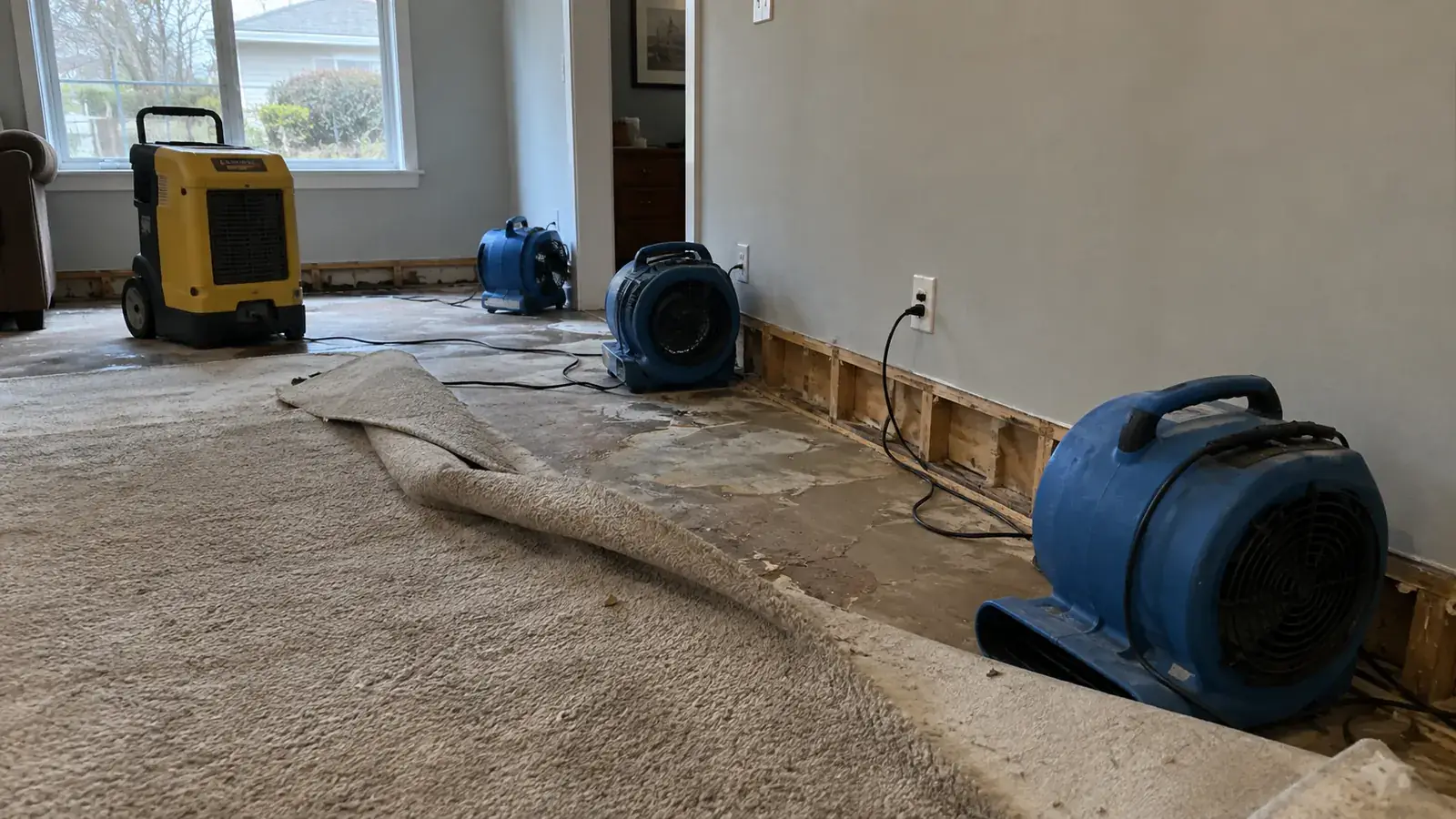
Once the surface water is gone, moisture meters find where the rest went. Water travels further than the visible line on the wall, almost always, and this is the step that separates a job that dries properly from one that comes back as a mold claim six weeks later. Readings and photographs are taken before anything is torn out, which is what an adjuster will want later.
Clean water from a supply line is extracted and the materials are dried in place wherever possible. Gray water from an appliance discharge or a washing machine is extracted and the porous materials are usually removed. Black water, meaning sewage or flood water from outside, is handled under containment and porous material is removed rather than dried, because it cannot be cleaned back to safe.
You do not need to work out which category you have. Describe what happened on the phone and it will be established on site.
Shut the water off at the main if the source is a supply line and you can reach the valve safely. Kill power to the affected area at the breaker if water is anywhere near outlets, cords or a panel. Lift what you can off the floor, especially anything with dye in it, because rugs and cardboard stain wet flooring permanently within hours. Photograph everything before you move it.
Do not run a household fan across standing water. It spreads moisture into dry parts of the building without removing any of it.
Calling costs nothing, and you will get an honest answer about the need for a crew and what you can safely handle yourself.
(864) 515-4097Extraction begins as soon as the crew is on site, because the equipment travels on the truck rather than arriving on a second visit. Dispatch runs 24 hours a day across Greenville County, including nights and weekends. You will be given an arrival window on the call.
For a small spill on a hard floor, yes. For anything that reached carpet, wall cavities or a subfloor, a wet vac removes the water you can see and leaves the water you cannot. The water held in carpet pad and inside walls is where the damage actually happens.
Usually not for a contained loss. Extraction itself takes a few hours and you can generally stay in unaffected rooms. Larger losses involving sewage, several rooms, or power being isolated may make staying impractical for a night or two.
No. Extraction removes standing and absorbed water. What remains inside the structure has to be dried out with air movers and dehumidifiers over several days, monitored with meters until it reads dry. Extraction without drying is the most common way a small loss becomes a mold job.