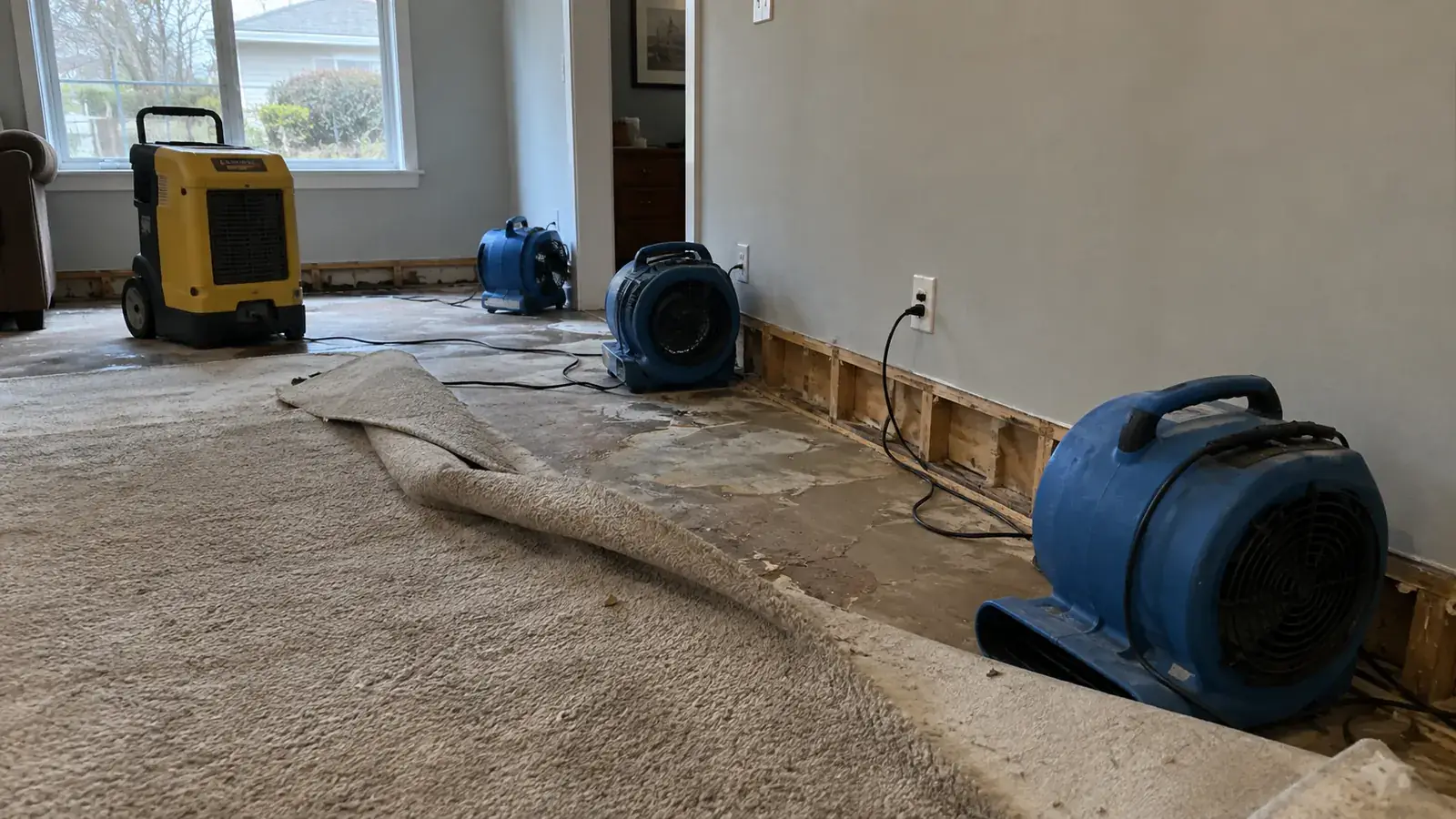
Extraction and structural drying across Piedmont, where some of the oldest housing in the Upstate sits close to the Saluda River and takes water from two different directions.
(864) 515-4097 Call nowWater damage gets more expensive by the hour. Lines are answered at any time, including nights, weekends and holidays.
(864) 515-4097Useful to have ready, though none of it is required:
Piedmont is a mill village that grew up on both banks of the Saluda River, and it holds two risks that most of the Upstate does not carry at the same time: very old building stock, and proximity to moving water.
Properties in the lower-lying parts of Piedmont sit close enough to the Saluda that sustained heavy rain is a different event here than it is on higher ground. Rising water, unlike a burst pipe, is contaminated by definition. It has crossed ground, roads and whatever else is upstream, so it is handled as a category 3 loss: containment, removal of porous materials rather than drying them, and sanitizing before anything is rebuilt.
This is also the clearest example of the insurance divide on this whole site. Water that rises into a building from outside is not covered by a standard homeowners policy. It requires separate flood insurance. If you are near the river and do not know if you carry it, that is worth checking on a dry day rather than a wet one.
The original Piedmont Manufacturing housing dates to the late nineteenth century, and a good deal of what survives has been modified, added to and re-plumbed repeatedly since. Heart pine floors, plaster, shallow crawl spaces and brick pier foundations are all common.
Old-growth heart pine is a genuinely different material from modern flooring. It is dense, it is nearly irreplaceable, and it is worth attempting to dry in place rather than pulling up wherever the readings make that possible. That decision gets made in the first day or two, not the first week.
Piedmont straddles the Greenville and Anderson county line and is unincorporated, so there is no town hall and no single set of local rules. For drying and mitigation it changes nothing. For reconstruction permits afterward it matters which side of the river the property sits on, and that is worth establishing early.
Calling costs nothing, and you will get an honest answer about the need for a crew and what you can safely handle yourself.
(864) 515-4097Yes, the Greenville County side and the Anderson County side, including the old mill village streets, the Highway 20 corridor and the properties along the river.
Rarely, if it is carpet, laminate or engineered plank, because river water is contaminated and porous materials that absorbed it are removed rather than dried. Solid hardwood is sometimes recoverable depending on how long it sat and how deep the water got. The category of water drives that decision more than the material does.
Generally no. Water rising into a building from outside falls under separate flood insurance, which is a different policy from a standard homeowners policy. Water from a failed pipe inside the house is usually covered. Near the river this distinction is the single most important thing to know about your own coverage.
Often yes, if drying starts early and the water was clean. Heart pine is dense and slow to release moisture, which cuts both ways: it takes up water slowly and gives it up slowly. Specialized floor drying can pull moisture through the boards rather than removing them, but the window for that is measured in days.