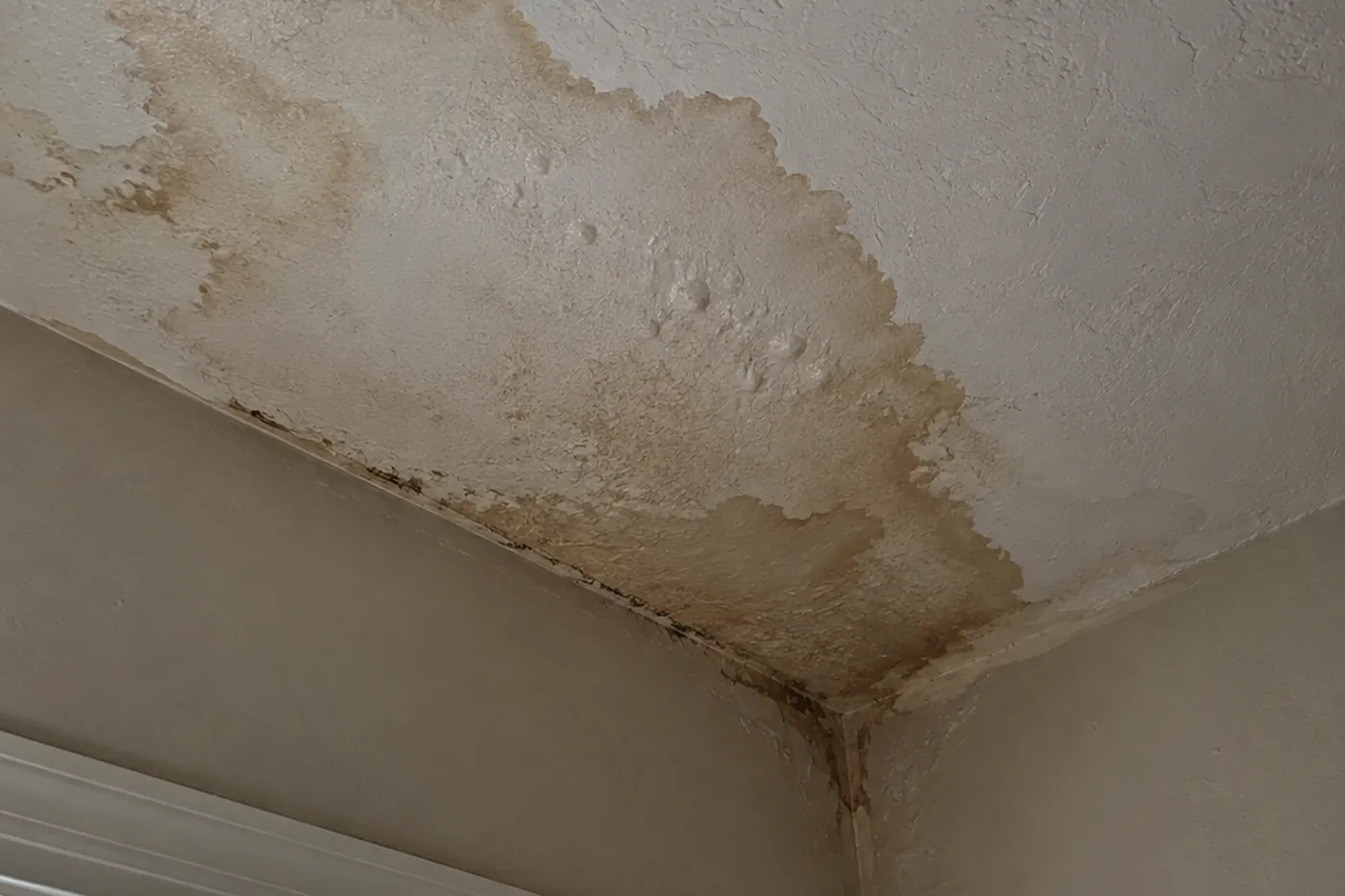
A stain on the ceiling is the end of the water's journey, not the beginning. The source is usually somewhere else entirely.
(864) 515-4097 Call nowWater damage gets more expensive by the hour. Lines are answered at any time, including nights, weekends and holidays.
(864) 515-4097Useful to have ready, though none of it is required:
Water follows framing, pipes and gravity before it appears. By the time it shows on a ceiling it has traveled along a joist, down a duct, or across the back of the drywall above, often several feet from wherever it got in. Cutting into the ceiling directly above a stain frequently finds nothing.
There are only a handful of sources, and the pattern of the stain narrows it quickly. A leak from a bathroom above appears near a fixture and worsens after use. A roof leak worsens after rain and often shows near an exterior wall or a penetration such as a vent or chimney. An HVAC condensate problem appears in summer near ductwork and produces a steady stain with no rain connection. A supply line failure produces rapid saturation and usually sagging rather than a slow ring.
Thermal imaging and moisture meters trace the wet path back above the ceiling without opening it up first, which is what keeps the repair small.
A stain is a problem. A ceiling that is sagging, bulging or holding a visible pocket of water is a safety issue, because saturated drywall is heavy and comes down without much warning. Keep people out from under it, move what you can, and treat it as urgent rather than something to watch.
Do not puncture a bulge to drain it unless you have moved everything below and are prepared for the volume that comes out. It is often far more than it looks.
Above a ceiling there is usually insulation, and insulation that got wet holds water against the drywall and the joists for a long time. Drying a ceiling means dealing with what is above it, not blowing air at the stain. Wet insulation is removed. The cavity is dried and monitored, then the ceiling is repaired once the readings say the structure is dry.
A ceiling that is patched and painted over a cavity that is still wet will stain again, and by then the framing has had weeks of moisture.
Calling costs nothing, and you will get an honest answer about the need for a crew and what you can safely handle yourself.
(864) 515-4097Water travels along framing and pipes before it drops. The stain marks where it finally came through the drywall, which can be several feet from the entry point. This is why tracing the source with meters matters more than opening the ceiling where the stain is.
Only once the cavity above is dry and the source is fixed. Stain-blocking primer will hide it cosmetically, but painting over an active or unresolved leak means the stain returns and the framing above keeps getting wet in the meantime.
Yes. Saturated drywall is heavy and a bulge holding water can come down suddenly. Keep people and pets out of the room, move furniture if you can do so safely, and treat it as an emergency rather than something to monitor.
Usually not. Typically only the saturated section is removed, determined by the moisture readings rather than by the visible stain. Full replacement is more common with plaster ceilings or where water traveled across a large area.